


Double crochet creates a fabric that is generally taller and more open than single crochet, which often makes it work up faster and drape more naturally instead of holding a rigid shape. The stitch uses a yarn-over before inserting the hook, then pulls through loops in stages, building height that single crochet cannot match.
The Short Answer
Yarn over once, insert the hook, pull up a loop, then yarn over and pull through two loops twice. The stitch is taller than single crochet and creates open, drapey fabric that works up quickly.
Main Steps
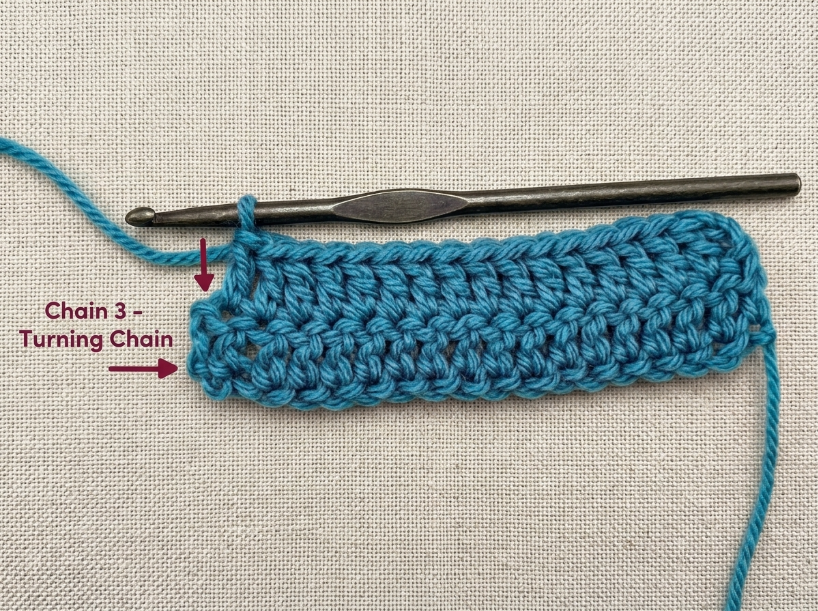
Most beginner guides say to start with a foundation chain, add three turning chains, and work your first double crochet into the fourth chain from the hook. That advice is correct for flat projects where you want the turning chain to count as the first stitch. In practice, counting that chain-3 as a stitch creates a visible gap at the edge, which some crocheters dislike. If clean edges matter more than following the traditional convention, you can use a non-counting turning chain. In that method, the chain-3 does not count as a stitch, so the first double crochet is worked into the first stitch of the row. The exact placement of the final stitch depends on the pattern’s stated stitch-counting method.
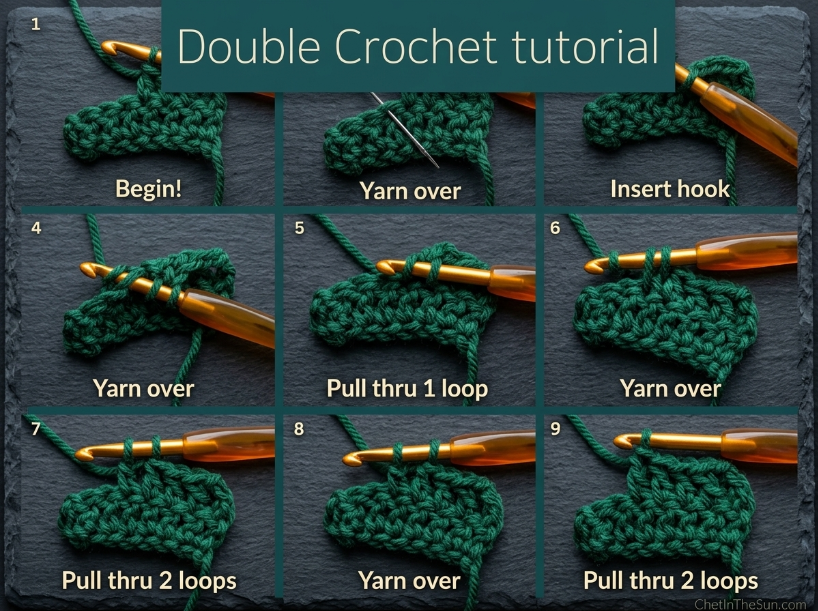
The mechanics of the stitch are consistent. Yarn over once before inserting the hook into the stitch. Pull up a loop so you have three loops on the hook. Yarn over and pull through the first two loops, leaving two loops. Yarn over again and pull through the remaining two loops. The stitch is complete when one loop remains on the hook. The initial yarn-over is part of the construction that allows the double crochet to be worked through two pull-through stages, producing a taller stitch than single crochet. If you are also learning about how yarn direction affects stitch structure, Yarn Under vs. Yarn Over: The Structural Guide to Crochet Stitch Anatomy explains the physical differences in detail.
Tension affects how tall each stitch stands. Loose tension creates a fabric with more drape and larger gaps between stitches, which works well for scarves and shawls. Tight tension compresses the stitch height slightly and makes the fabric firmer, which is useful for structured pieces like bags. Results vary with hook size, yarn weight, and how firmly you hold the working yarn, so a gauge swatch is the most reliable way to confirm your stitch count matches the pattern.
| Step | What to do | Watch out for |
|---|---|---|
| Foundation chain | Follow the pattern’s instructions for the starting chain and turning chain | Chaining too tightly makes the first row difficult to work into |
| First stitch | Yarn over once, insert hook into the 4th chain from hook, yarn over and pull up a loop (3 loops on hook) | Skipping the yarn-over changes the construction of the stitch and will not produce a standard double crochet |
| Complete the stitch | Yarn over, pull through 2 loops. Yarn over again, pull through the last 2 loops | Pulling through all 3 loops at once does not produce a standard double crochet, the resulting stitch has a different construction and height |
| Continue across row | Work one double crochet into each remaining chain, turn, chain 3 to start the next row | Forgetting to count stitches at the end of the row causes the piece to widen or narrow |
Comparison / Options
Chain-3 turning chains are the standard recommendation because they match the height of a double crochet stitch and keep the row count accurate. If you skip the turning chain entirely, the edge of the fabric will be shorter than the rest of the row, which distorts the shape. However, the chain-3 creates a visible gap at the start of each row that looks loose compared to the rest of the fabric. Some crocheters prefer to chain 2 instead, which reduces the gap but requires working an extra stitch at the end of the row to keep the stitch count correct.
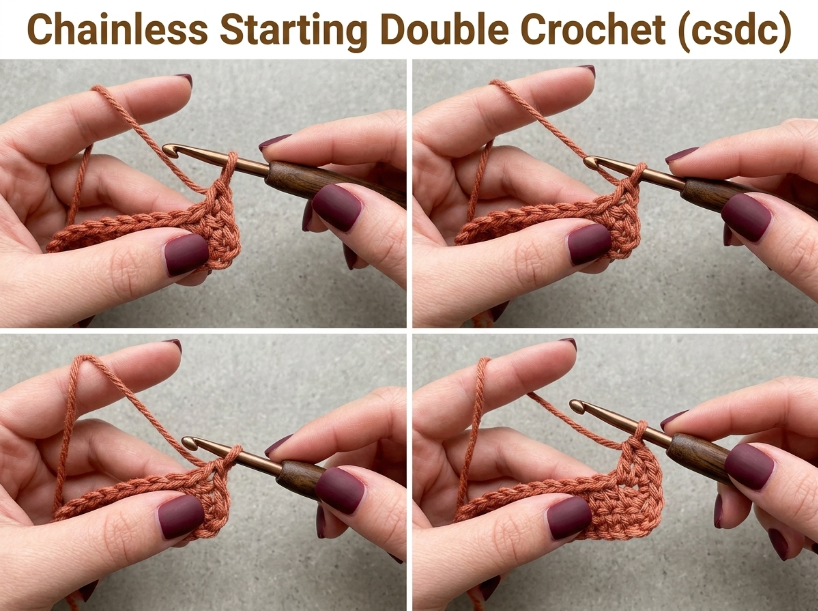
Another option is to use a standing double crochet at the start of each row instead of a turning chain. A standing double crochet is worked directly into the first stitch without using a turning chain. Several techniques exist for forming the standing stitch, and the exact method varies among crocheters. The edge looks cleaner because there is no gap, but the technique requires more hand coordination than a simple chain-3. If you are working in rounds instead of rows, the standing stitch eliminates the visible seam that a chain-3 and slip stitch join would create.
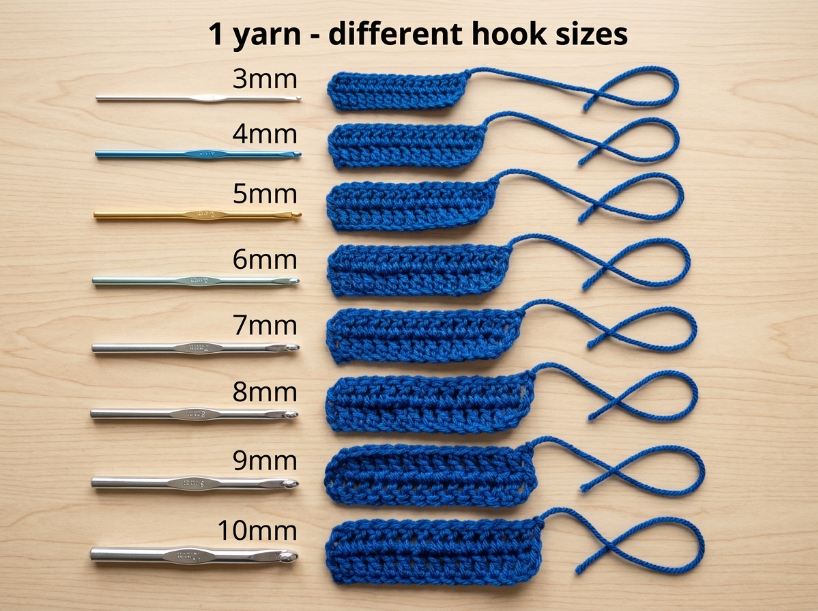
Hook size relative to yarn weight changes the fabric density. A 5mm hook with worsted weight yarn produces a standard double crochet fabric with moderate drape and visible gaps between stitches. A 6mm hook with the same yarn creates a looser, more open fabric that drapes heavily and works up faster. A 4mm hook makes the fabric firmer and denser, which reduces drape but increases structure. Keep in mind that a hook size mismatch affects gauge, so if your pattern specifies a hook size, test it with a swatch before committing to the full project.
Common Mistakes
The most common mistake is forgetting to yarn over before inserting the hook. The yarn-over is an essential part of double crochet construction, and skipping it changes the stitch and will not produce a standard double crochet. The initial yarn-over is part of the construction that leaves three loops on the hook after the pull-up, allowing the stitch to be completed in two stages. Skipping it changes the stitch construction and does not produce a standard double crochet.
Another frequent error is pulling through all three loops at once after the initial yarn-over and pull-up. That does not complete a standard double crochet. Pulling through all three loops is the final step of a half double crochet. The fix is to pause after pulling up the loop and count the loops on your hook. If you see three loops, yarn over and pull through two, then yarn over again and pull through the remaining two. In practice, this becomes automatic after a few rows, but beginners often rush and skip the two-stage pull-through.
Inconsistent tension makes some stitches taller than others, which creates a wavy or uneven fabric. Tighter tension generally produces a denser, firmer fabric, while looser tension tends to create larger spaces and more drape. Tension improves with repetition, not with conscious effort. If your stitches are uneven, work a full row without stopping to adjust your grip, then compare the first few stitches to the last few. The difference will show you whether your tension loosens or tightens as you work.
Troubleshooting
If the fabric curls along the foundation edge, a foundation chain that is too tight may be contributing to the problem. A tight chain pulls the bottom edge inward, which makes the fabric cup instead of lying flat. The fix is to use a hook one size larger just for the foundation chain, then switch back to the pattern hook for the first row of double crochet. The foundation chain needs enough flexibility to accommodate the width of the stitches worked into it. If the chain is too tight, the stitches have nowhere to go except upward, which causes curl.
If the stitch count increases or decreases from row to row, you may be skipping a stitch, adding an extra stitch, or accidentally working into the turning chain when your pattern does not count it as a stitch. The turning chain at the start of a row looks like a regular stitch, so it is easy to work into it again when you reach the end of the next row. The fix is to mark the last stitch of each row with a stitch marker before turning. When you reach the marker on the next row, you know you are at the end and should not work any more stitches. If you are losing stitches, you may be missing the final stitch because it can be easy to overlook near the turning chain.
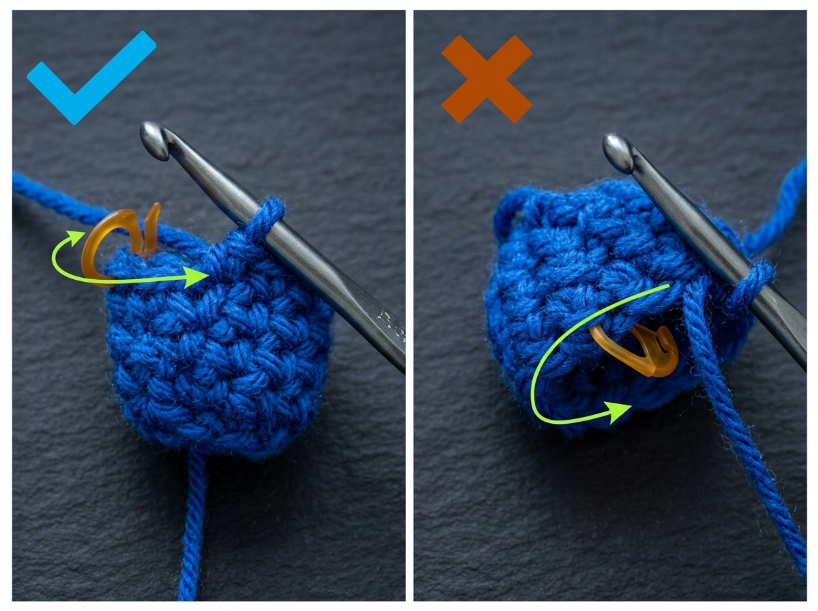
If the fabric feels stiff and dense instead of drapey, your tension is too tight or your hook is too small for the yarn weight. Double crochet generally produces a more open fabric than single crochet, but hook size, yarn weight and tension can make the resulting fabric considerably denser. You can switch to a hook one size larger, which forces more space between stitches and restores the natural drape of the stitch.
| Mistake | Why it happens | Fix |
|---|---|---|
| Forgetting the initial yarn-over | Muscle memory from single crochet carries over | Pause before inserting the hook and check that the yarn is wrapped around the hook once |
| Pulling through all 3 loops at once | Rushing through the stitch without counting loops | Yarn over and pull through 2 loops, pause, then yarn over and pull through the last 2 |
| Stitch count increases each row | Working into the turning chain at the end of the row | Mark the last stitch of each row with a stitch marker before turning |
| Fabric curls at the bottom edge | Foundation chain is too tight | Use a hook one size larger just for the foundation chain, then switch back |
Additional Tips
A worsted-weight acrylic yarn paired with a 5mm (H) hook is a practical combination for many beginners. Acrylic is inexpensive and easy to unravel and rework, which makes it useful for practice. Cotton can also be excellent for practice, particularly when you want crisp stitch definition. If you are practicing double crochet to make a structured bag or dishcloth, cotton is a good choice when you want crisp stitch definition and a relatively stable fabric with little elastic recovery.
Working continuously in the round can reduce the number of turning steps in some projects, but whether it is faster depends on the pattern and construction. Working in rounds often requires joining each round with a slip stitch and starting the next round with a chain-3, which some crocheters find more tedious than simply turning the work. If speed is the priority and the project allows it, continuous spiral rounds eliminate the joining step, but they can create a visible jog between rounds, particularly when changing colors. They are commonly used for projects such as amigurumi and some hats.
If your project needs to match a specific finished size, hook size and yarn weight matter more than stitch technique. For example, a particular worsted-weight yarn worked with a 5mm hook might produce around 14 double crochet stitches per 4 inches, while a larger hook could produce fewer stitches. Your actual gauge must be determined with a swatch. If your gauge swatch does not match the pattern, adjust the hook size rather than trying to change your tension.
Questions You Might Still Have
Q: What is the best way to practice double crochet?
Start with a foundation chain of 20 stitches using worsted weight yarn and a 5mm hook. Work one row of double crochet, turn, and repeat for several rows. The repetition builds muscle memory faster than switching between stitch types, and worsted weight yarn is thick enough to see each loop clearly.
Q: How long does it take to learn double crochet?
Many beginners can learn the basic sequence after a few practice attempts, while consistent tension and even stitch formation usually take longer to develop.
Q: What hook size is best for learning double crochet?
A 5mm hook with worsted-weight yarn is a common starting point for learning double crochet. Patterns often specify different combinations, but this pairing produces a fabric with moderate drape and clear stitch definition. If your gauge does not match the pattern, adjust the hook size rather than switching yarn weights.
Q: Why does my double crochet look wrong?
Forgetting the initial yarn-over before inserting the hook is the most frequent error. Pulling through all three loops at once instead of working in two stages is another common mistake. Both errors collapse the stitch height and turn the double crochet into a different stitch entirely.
Q: How do I fix curly edges on a double crochet swatch?
If a stitch looks wrong, pull the working yarn to undo the stitch and rework it. If the fabric curls, a foundation chain that is too tight may be contributing to the problem, so use a larger hook for the starting chain on the next project. If the stitch count changes from row to row, mark the last stitch of each row with a stitch marker.
Q: Is double crochet faster in the round?
Working continuously in the round can reduce the number of turning steps in some projects, but whether it is faster depends on the pattern and construction. Continuous spiral rounds eliminate the joining step, but they can create a visible jog between rounds, particularly when changing colors. They are commonly used for projects such as amigurumi and some hats.
📅 Last reviewed: August 2026 · This article is reviewed every 12 months.
Summary
Double crochet creates a tall, open fabric that drapes naturally and works up faster than single crochet. The stitch requires a yarn-over before inserting the hook, then pulls through loops in two stages to build height. Tension and hook size affect fabric density, and the turning chain method changes whether the edge has a visible gap. Once you understand how the initial yarn-over controls stitch height, adjusting tension and hook size to match your project becomes straightforward.

