


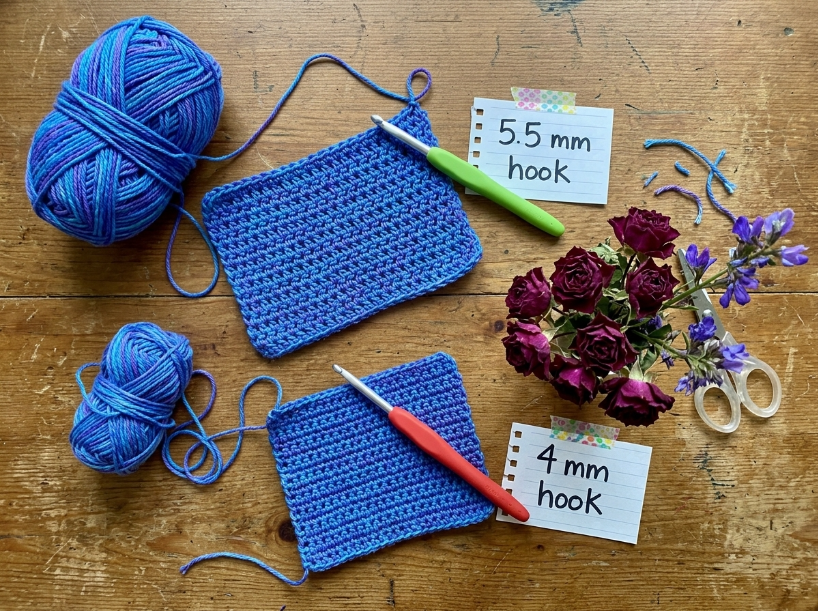
A commonly labeled G hook is 4 mm, while an H hook is 5 mm, making the difference 1 mm when those metric sizes are used. Because hook lettering can vary between manufacturers, check the millimeter measurement rather than relying on the letter alone. While some worsted-weight yarn labels recommend a hook around this size, the recommended hook varies by yarn and manufacturer, and many weight-4 yarns are paired with larger hooks.
The Short Answer
A G hook (4 mm) creates denser fabric with less drape. An H hook (5 mm) produces more open stitches and softer drape. A 1 mm hook difference can noticeably change gauge, but there is no fixed number of stitches that the change will produce. The actual difference depends on the yarn, stitch pattern, and your tension, affecting both fabric structure and finished dimensions.
What to Look For
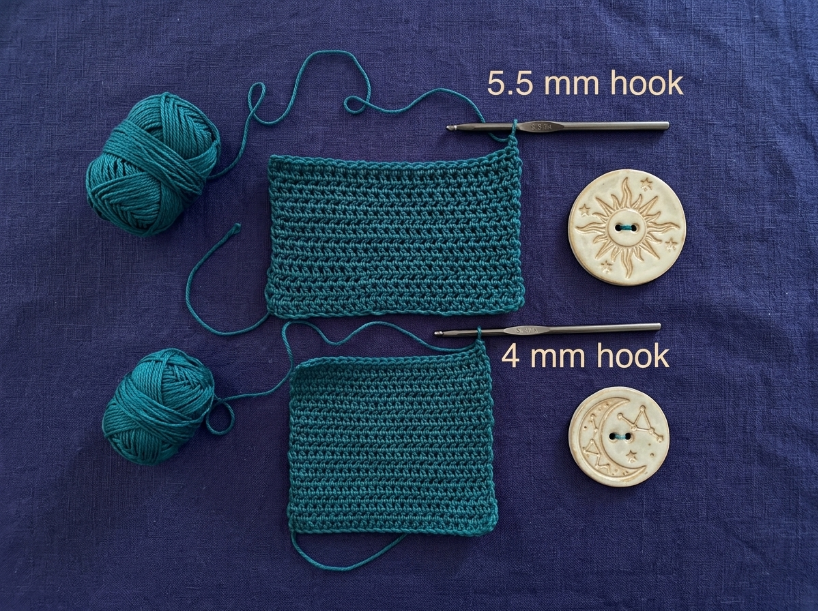
Patterns using worsted-weight yarn can call for a wide range of hook sizes depending on the intended gauge and fabric. A 5 mm H hook is one possible choice, but it is not a universal worsted-weight hook size. A 5 mm hook can produce a relatively open fabric with more drape, depending on the yarn and your tension. Whether that fabric is appropriate depends on the pattern’s required gauge and the project’s intended structure.
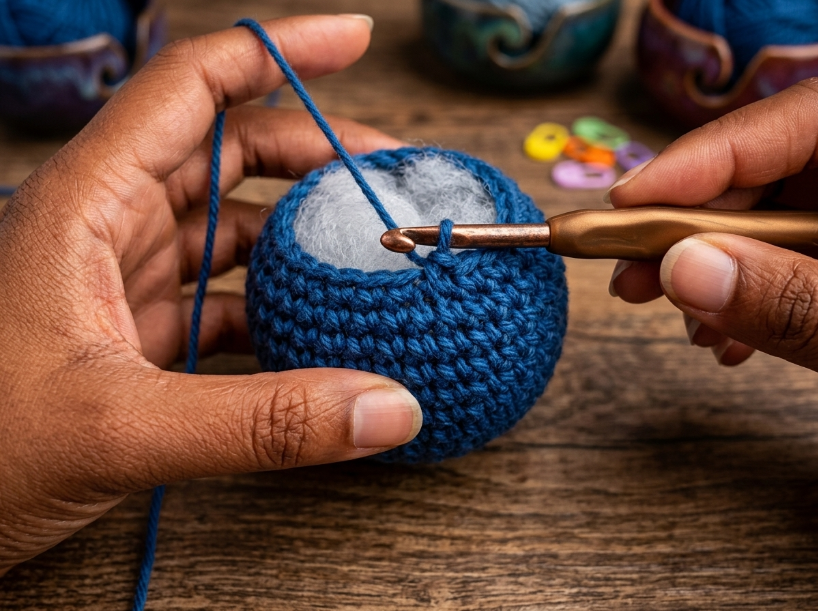
The comparison shifts when the project requires firm fabric that holds its shape under stress. Amigurumi, bags, and structured accessories need stitches tight enough that stuffing or contents stay hidden and the piece does not sag over time. A smaller hook with the same yarn will generally create a denser fabric, which can help reduce gaps in amigurumi and provide more structure in accessories. The tradeoff is hand fatigue, since tighter tension requires more grip strength over long sessions.
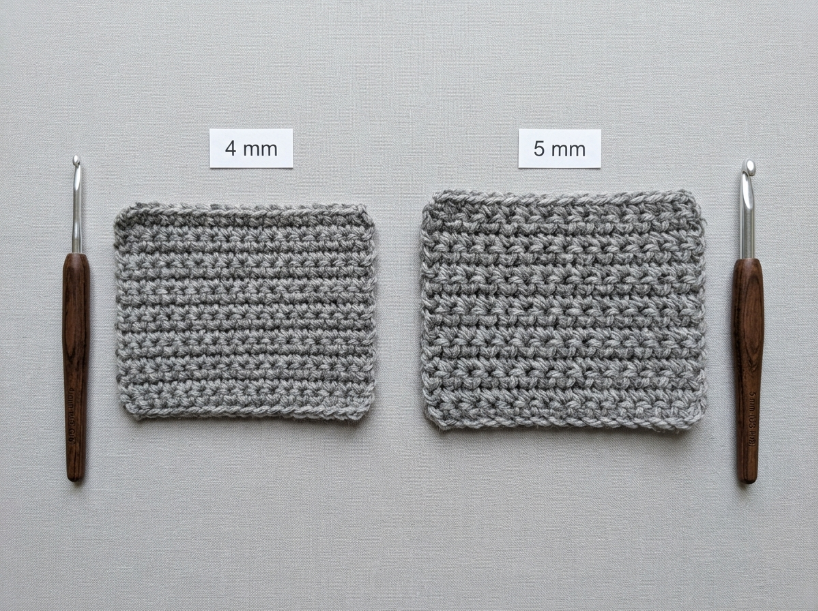
A gauge swatch reveals the practical difference. Work a 4-inch square in single crochet with worsted yarn using both hooks, block them identically, then measure. The difference in stitch counts per 4 inches compounds across a full project, changing both the fabric feel and the final dimensions if you substitute hooks without adjusting stitch counts.
| Hook | Typical effect | Can suit |
|---|---|---|
| G (4 mm) | Denser, firmer fabric | Amigurumi, structured accessories |
| H (5 mm) | Slightly more open, flexible fabric | Blankets, garments, general projects |
Side-by-Side Comparison
It is common to start with the hook size printed on the yarn label, but that recommendation is only a starting point. For worsted-weight yarn, the suggested hook can vary considerably between yarns, and the CYC’s general range for medium-weight yarn is broader than a single hook size. For blankets and garments, the appropriate hook is the one that produces the pattern’s required gauge and the desired balance of drape and structure. An H hook may produce a suitable fabric with some worsted-weight yarns, but the result depends on the yarn, stitch pattern, and crocheter’s tension.
In practice, the hook printed on the yarn label is a starting point, not a universal rule. Tension varies enough between crocheters that someone who crochets loosely may need to drop to a G hook to achieve the same gauge another crocheter gets with an H. The opposite applies for tight crocheters, who may need to move to a larger hook to match the pattern’s gauge. Working swatches with both sizes using the exact yarn and stitch pattern the project requires is the most reliable way to know which hook produces the right fabric for your hands.
Results also vary with stitch type. Single crochet worked with a G hook will generally produce a denser fabric than the same stitch worked with an H hook, although the final firmness depends on the yarn and tension. Using that same hook for half double or double crochet produces fabric with more give because taller stitches naturally create more space between rows. An H hook reduces that density difference, which is why it works well across multiple stitch heights. The limitation becomes clear when you need maximum density, as with amigurumi where even an H hook may produce fabric too open to hide stuffing completely.
For reference on how US hook sizing translates to metric measurements and why that 1 mm difference matters structurally, Crochet Hook Sizes Guide: US vs Metric Conversion Chart & Tips explains the measurement standards and how different regions label identical hook diameters.
Per-Option Analysis
A smaller hook generally produces smaller, tighter stitches with the same yarn and tension, creating a denser fabric. This matters because the space between stitches determines whether the fabric holds its shape or relaxes over time. Denser fabric resists stretching under weight, which is why bags and amigurumi benefit from the smaller hook even when using yarn rated for a larger size. The fiber structure does not change, but the mechanical arrangement of the stitches does.
An H hook allows more space for the yarn to spread as it forms each stitch, which creates fabric with more drape and flexibility. Many crocheted garments benefit from fabric that moves comfortably with the body rather than feeling overly rigid. Fabric worked with an H hook folds and flows more naturally than fabric worked with a G, which makes it more comfortable to wear. The tradeoff is that this more open fabric may be less suitable for projects that need to maintain structure, particularly when the item will be filled or subjected to weight.
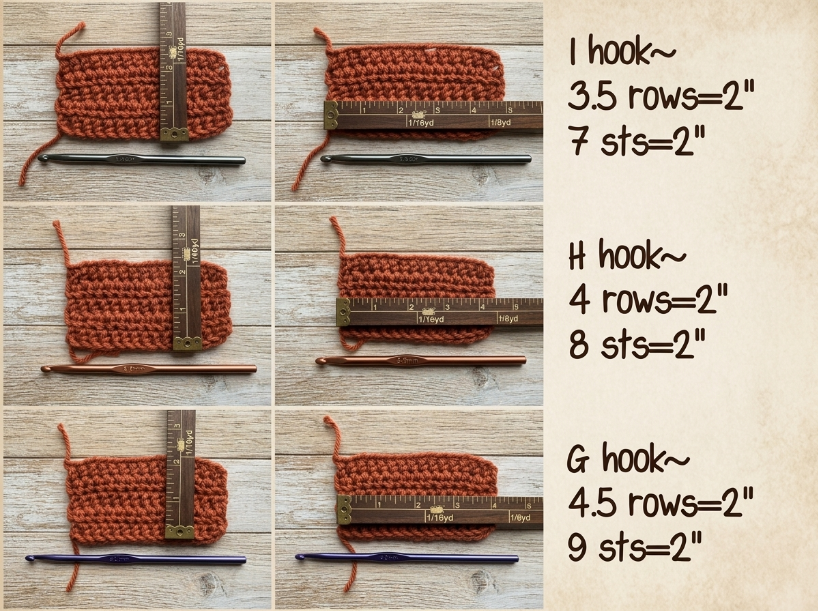
The choice between hooks also affects how long a project takes to complete. A larger hook will often produce larger stitches and a looser gauge with the same yarn and stitch pattern, so fewer stitches may be needed to cover a given area. The actual difference depends on your tension and the yarn. On a large project, even a small change in gauge can accumulate into a noticeable difference in finished dimensions and the amount of work required.
Which Should You Choose?
Matching the hook size to the yarn label often works when the project fits standard expectations for drape and structure. Even so, the recommendation can fail when the project demands fabric characteristics the standard gauge doesn’t provide. A tote bag worked with an H hook might stretch and sag under the weight of groceries because the fabric lacks the density to resist deformation. Dropping to a G hook with the same yarn may help create a denser fabric, but the final result still depends on the yarn, stitch pattern, tension, and construction.
A common mistake that causes frustration is assuming hook size only affects gauge and not fabric behavior. Two swatches can have the same stitch count while still differing in firmness, drape, stretch, and recovery because of differences in yarn, stitch pattern, and tension. A swatch worked with a G hook will generally feel firmer than one worked with an H hook using the same yarn and stitch pattern, while the H-hook swatch will generally have more flexibility and drape. Testing both hooks with the actual yarn and stitch pattern reveals which fabric behavior matches the project requirements.
Another frequent error is switching hooks mid-project to speed up progress without adjusting stitch counts. Moving from a G to an H hook halfway through a blanket creates a visible line where the fabric density changes, and the second half will measure wider than the first even if the stitch count per row stays the same. The safer approach is to commit to one hook size for the entire project, or to switch only at natural transition points like color changes where the density shift can be incorporated into the design.
| If you want… | Starting point |
|---|---|
| Denser fabric | Try the smaller hook, then check gauge |
| More drape | Try the larger hook, then check gauge |
| Amigurumi | Usually a relatively small hook for the yarn, to reduce gaps |
| Garments | Choose the hook that produces the pattern’s required gauge and fabric feel |
| Structured bags | Test a smaller hook if you need a firmer fabric |
Questions You Might Still Have
If curling is caused by very tight tension, going up a hook size can sometimes reduce the curl by producing a looser fabric. However, hook size is not a universal solution because curling can also result from stitch structure, construction, or fiber characteristics. If you suspect tight tension is contributing to the curl, test a larger hook and compare the resulting fabric before changing the entire project.
If the fabric feels too stiff or rigid, one possible cause is that the hook is too small for the yarn and stitch pattern being used. If the fabric is too firm, trying a larger hook can create a more open fabric, provided the resulting gauge and structure still suit the project. That said, if the project requires stiff fabric for structure, staying with the G hook and accepting the rigidity is the appropriate choice rather than a problem to fix.
When gauge is off, the fix depends on which direction the error goes. If your swatch has more stitches per 4 inches than the pattern requires, try a larger hook. If it has fewer stitches, try a smaller hook. The edge case is when your gauge falls exactly between the two hook sizes, in which case the decision comes down to whether the project tolerates slightly loose or slightly tight fabric better. Structured items err toward the smaller hook, while drapey items err toward the larger.
Still Deciding?
Q: Which hook size is better for a beginner?
There is no single hook size that is best for every beginner. A medium-sized hook paired with a yarn that is comfortable to handle can make learning easier, but your yarn label and the project’s pattern should guide your starting point. For a specific project, make a gauge swatch and adjust the hook size if necessary.
Q: What are the main differences when comparing these two hook sizes?
The G hook (4 mm) creates denser, firmer fabric, while the H hook (5 mm) produces softer, more drapey fabric with the same yarn. The choice affects both how the finished piece feels and how it behaves under stress or repeated washing. The denser fabric created by a G hook can be more resistant to stretching and sagging, which can make it useful for heavy-use items such as bags. That said, overall durability also depends on the yarn fiber, construction, and how the item is used. The looser fabric created by an H hook folds and drapes better.
Q: Do smaller crochet hooks wear out faster?
Hook durability depends on material, not size. Aluminum and steel hooks in both G and H sizes withstand years of use without bending or wearing down. Plastic hooks can develop rough spots or stress cracks faster, but this happens at a similar rate regardless of diameter.
Q: Does hook size affect how much yarn I use?
Yes, it can. Changing hook size changes gauge and therefore the number and size of stitches needed to reach a particular finished dimension. In practice, there is no universal rule that a smaller hook will always use more yarn, the difference depends on the yarn, stitch pattern, tension, and finished dimensions.
Q: Should I ever use a G hook if the pattern calls for worsted yarn?
Yes. If a pattern calls for worsted-weight yarn but your fabric is too loose with the recommended hook, you can try a smaller hook to achieve a denser fabric. Likewise, a larger hook may be appropriate if your fabric is too tight. The important test is whether your swatch matches the pattern’s required gauge and produces the intended fabric.
Q: Can I change hook sizes in the middle of a project?
Switching hooks mid-project creates a visible line where fabric density changes, which reads as a mistake unless incorporated intentionally into the design. If you must switch, do it at a color change, texture transition, or other natural break where the density shift can look deliberate.
📅 Last reviewed: August 2026 · This article is reviewed every 12 months.
Summary
G vs H isn’t really about which hook is “better.” It is about how the hook changes the fabric, and the correct choice is the one that gives you the required gauge and fabric characteristics. The G hook will generally create a denser fabric than an H hook when the same yarn, stitch pattern, and comparable tension are used. An H hook will generally produce a more open fabric with greater drape. Neither hook is universally better: the right choice depends on the pattern’s gauge requirements, the yarn, your tension, and the fabric characteristics you want.

