


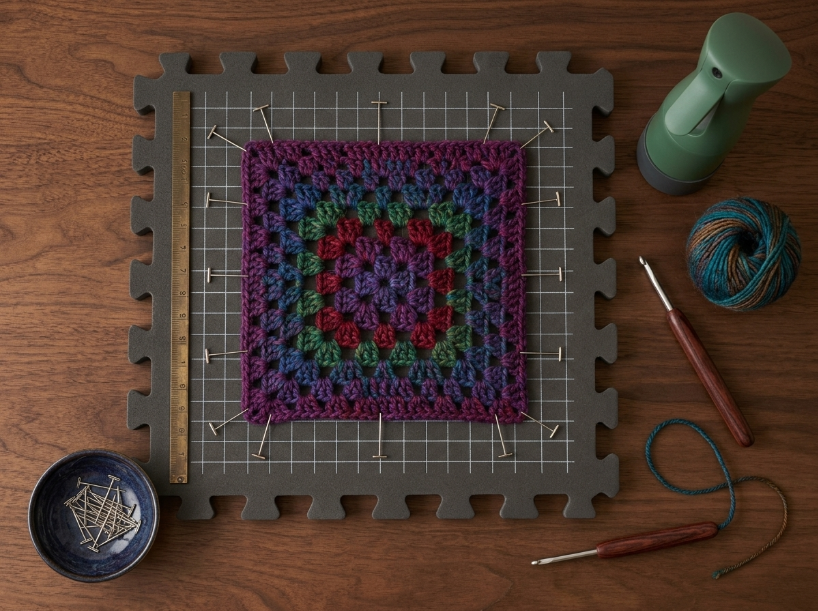
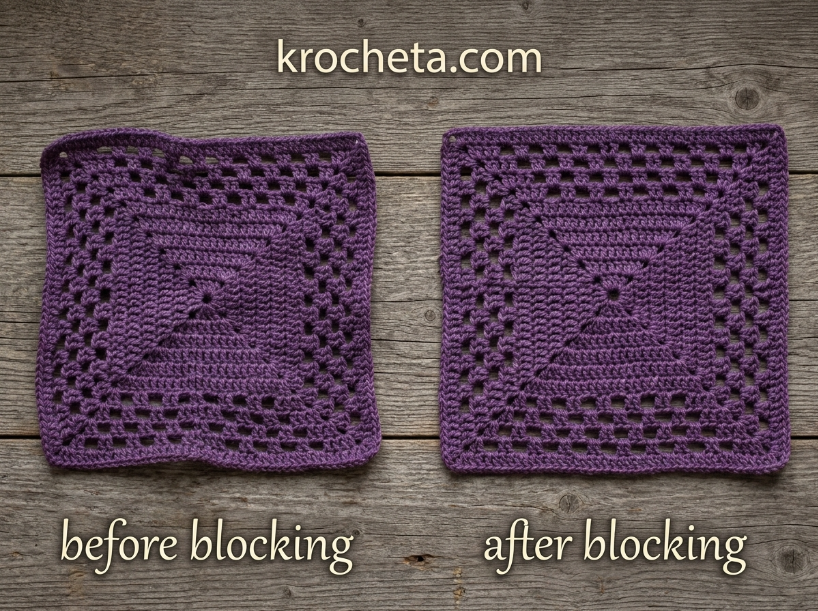
Blocking transforms a piece of crochet fabric from its worked state into its final intended shape by manipulating the fibers through moisture, heat, or both. The technique flattens curled edges, evens out stitch tension, and opens up lace patterns, but the permanence of the result depends entirely on the fiber structure of the yarn you used.
The Short Answer
Wet blocking is commonly used for many natural fibers and can produce lasting changes in shape, although the result depends on the fiber, yarn construction, and care method. Steam can permanently reshape acrylic if enough heat is applied, but excessive heat can reduce the yarn’s spring and elasticity. Controlled steam blocking can be less aggressive, so always test a swatch first. For acrylic, wet blocking avoids the heat-related risk of damaging the fibers, but its shaping effects are often less pronounced and less durable than heat-based blocking.
Main Steps
Wet blocking is a common starting method because it works on many fiber types without direct heat. The process involves soaking the finished piece (for a simple blocking-only soak, plain water is sufficient, but if the piece needs washing, follow the yarn label’s care instructions and use an appropriate detergent), gently squeezing out excess water without wringing, pinning the damp fabric to shape on blocking mats or foam, and letting it dry completely before unpinning. This works because water temporarily relaxes the fibers, allowing them to be repositioned. Wool fibers respond well to moisture and can be reshaped while damp, so the fabric can retain much of the blocked shape after drying. Excessive heat, moisture, or agitation can instead cause felting and irreversible shrinkage. Acrylic fibers have strong polymer memory and generally spring back toward their worked tension state after the next wash, making wet blocking a temporary fix for most acrylics.
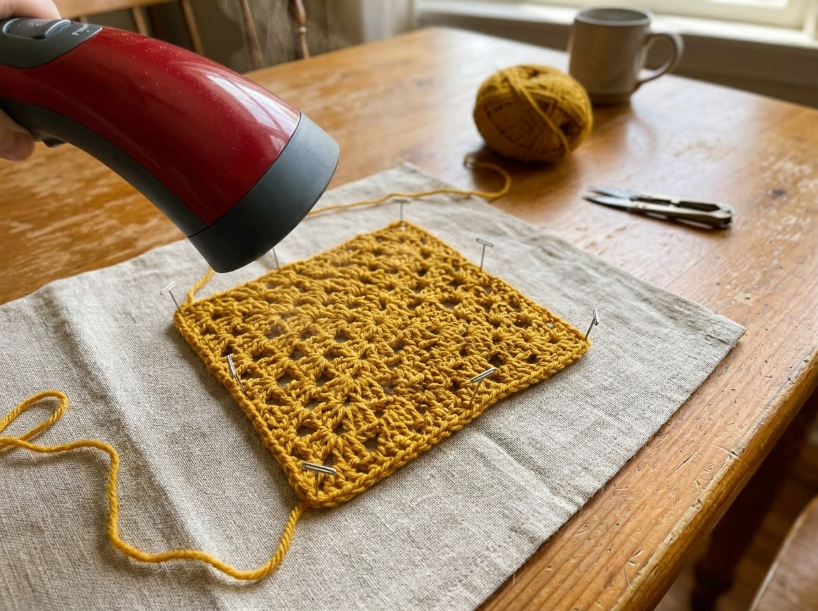
If you need permanent results with acrylic, steam can heat acrylic enough to relax and reshape the fibers. Higher or prolonged heat can permanently flatten or alter the yarn, a process crocheters often call “killing” the acrylic. The catch is that killing acrylic can compromise any project that relies on stretch or structure, including ribbing, fitted garments, and amigurumi. For projects like lace shawls or flat blankets where drape matters more than elasticity, steam blocking acrylic can work. Always follow the care instructions on your yarn label before applying any heat.
The comparison data is consistent across fiber types. Cotton can be wet blocked to improve drape and sizing, but it does not bloom or relax the way wool does because cotton fibers are smooth and lack the scale structure that allows wool to respond as dramatically to moisture. Understanding how different fibers respond to blocking helps you choose the right yarn from the start.
| Step | What to do | Watch out for |
|---|---|---|
| Soak the piece | Submerge in cool or lukewarm water per yarn label for 10 to 15 minutes | Check the yarn label for temperature restrictions |
| Remove excess water | Gently squeeze, do not wring or twist | Wringing distorts stitch structure |
| Pin to shape | Use rustproof T-pins or blocking pins on foam mats | Pin every few inches to hold edges flat |
| Dry completely | Leave pinned until fully dry | Unpinning too early lets fabric spring back |
Comparison / Options
The common advice is to wet block all gauge swatches before measuring stitch and row counts because blocked fabric behaves differently than fabric fresh off the hook. That is accurate for natural fibers, where blocking relaxes tension and opens up the stitches. The key variable here is whether the yarn will hold that relaxed state. Wool and cotton swatches should generally be blocked before measuring because the post-blocking measurements reflect how the finished garment will behave after washing. Acrylic swatches present a different problem. Wet blocking an acrylic swatch will temporarily relax the stitches, but those measurements may not match the fabric’s behavior after the first wash, when the polymer memory reasserts itself.
If you are working with acrylic and need accurate gauge, measure the swatch in its unblocked state or steam-block it to simulate the permanent killed state. That said, steam-blocking a gauge swatch only makes sense if you plan to steam-block the finished garment, which is generally only advisable for flat, non-structural pieces. For garments that need elasticity, the unblocked acrylic gauge is a more accurate predictor.
Results vary significantly with hook size and tension. A swatch worked with tight tension on a small hook will curl more and respond more dramatically to blocking than a loose swatch worked with a larger hook. If your project uses a stitch pattern with mixed stitch heights (like a shell stitch or lace), blocking will even out the fabric and open up the spaces between stitches more than it will on a dense single crochet fabric. The effect is most visible on lace, where blocking is often the difference between a bunched-up piece and one where the pattern reads clearly. If you are working a lace project, blocking is part of the construction process.
Common Mistakes
A common mistake is assuming all blocking methods work the same on all fibers. Wet blocking acrylic produces temporary results because acrylic fibers are synthetic polymers with elastic memory, meaning they return toward the tension state they were worked in after the fabric dries and is handled again. Excessive heat can permanently flatten or alter the yarn, which is why it is called killing the yarn. This distinction matters because killing acrylic removes its elasticity permanently, making it unsuitable for ribbing, fitted garments, or any project that needs to stretch and recover.
Another frequent error is ignoring the yarn label’s care instructions when wet blocking. For a simple blocking-only soak, plain water is sufficient, but if the piece needs washing, follow the yarn label’s care instructions and use an appropriate detergent.
A third mistake is unpinning the fabric before it is completely dry. Damp fibers are still mobile and will shift back toward their original shape if unpinned too early. Leave the piece pinned until it is completely dry, drying time can range from several hours to a day or more depending on the fiber, thickness, humidity, and airflow.
Troubleshooting
Pinning edges every few inches to hold the fabric flat works well for pieces with straight edges or gentle curves. The limitation becomes obvious when you are blocking a piece with complex shaping, like a circular doily or a garment with armhole curves. For these, you need to pin more frequently and may need to use blocking wires threaded through edge stitches to maintain smooth curves without scalloping. Blocking wires are particularly useful for shawls and lace, where you want a continuous straight or curved edge rather than a series of pinned points.
If the fabric is not lying flat even after pinning, the issue is usually uneven tension in the worked stitches. Blocking can reduce the visibility of tension inconsistencies, but it cannot eliminate them entirely. If the piece has significant tension variation, blocking can help redistribute the fabric and make the unevenness less noticeable, but the amount of improvement depends on the fiber and blocking method.
If the blocked piece loses its shape after the first wash, the fiber is likely acrylic and the blocking was temporary. The fix is either to reblock after every wash or to steam-block the piece once to set the shape permanently, but only if the project does not rely on elasticity and the yarn label permits steaming. Always follow the care instructions on your yarn label.
| Mistake | Why it happens | Fix |
|---|---|---|
| Edges curl back after blocking | Acrylic fibers have polymer memory and spring back | Ensure heat is safe for the yarn, or reblock after each wash |
| Fabric shrinks or felts | Wool was exposed to excessive heat, moisture, or agitation | Always follow the yarn label’s exact care instructions |
| Pins leave marks in the fabric | Pins are too large, placed under excessive tension, or inserted in a way that distorts the edge | Use rustproof blocking pins and place them carefully through the edge or use blocking wires for long/curved edges |
| Blocked shape does not hold | Piece was unpinned before fully dry | Leave pinned until completely dry |
Questions You Might Still Have
Q: What is the easiest way to block crochet for a beginner?
Wet blocking is a beginner-friendly method for many yarns because it uses moisture rather than direct heat, but the yarn label should always determine whether the fiber can safely be soaked and reshaped. Soak the piece according to the label’s instructions, squeeze out excess water gently, pin it flat on blocking mats or foam, and let it dry completely.
Q: How long does blocking take from start to finish?
Soaking takes about 10 to 15 minutes, pinning takes 10 to 20 minutes depending on the size and complexity of the piece, and drying generally takes anywhere from several hours to a day or more. Thicker yarns and denser fabrics take longer to dry than lace-weight or open-stitch projects. The total time is mostly passive waiting.
Q: Does hook size or yarn weight affect blocking?
Blocking does not require a specific hook size or yarn weight, as it is a finishing technique applied after the piece is already crocheted. However, the hook size and yarn weight you used to make the piece will affect how much the fabric responds to blocking, with tighter tension and smaller hooks producing fabric that relaxes more dramatically when blocked.
Q: What are the most common mistakes when blocking?
Ignoring the yarn label’s care instructions, unpinning the fabric before it is fully dry, and applying excessive heat to acrylic without understanding that it can permanently flatten the yarn. These mistakes either produce temporary results or permanently alter the fabric’s structure.
Q: How do I fix it if blocking goes wrong?
If the piece dries in the wrong shape, wet it again and repin it to the correct measurements. If excessive heat permanently flattened the elasticity of an acrylic yarn and ruined the piece, there is no fix because the polymer fibers have been permanently altered. For future projects, always test a swatch first and check the yarn label.
Q: Is there a faster method for blocking?
Steam blocking is faster because it does not require drying time. Holding a steam iron or garment steamer a few inches above the pinned fabric allows the steam to relax the fibers, and the piece is ready to unpin once it cools. That said, this works best when the yarn label permits it and can permanently alter acrylic yarn, so it is not universally faster if you need to preserve elasticity.
📅 Last reviewed: August 2026 · This article is reviewed every 12 months.
Summary
Wet blocking is commonly used for many natural fibers and can produce lasting changes in shape without direct heat. Steam can permanently reshape acrylic if enough heat is applied, but excessive heat can permanently reduce the yarn’s elasticity, making it unsuitable for ribbing or fitted garments. The key tradeoff is permanence versus risk. Always follow the care instructions on your yarn label to decide whether you need the shape to last or the yarn to keep its stretch without risking damage.

