


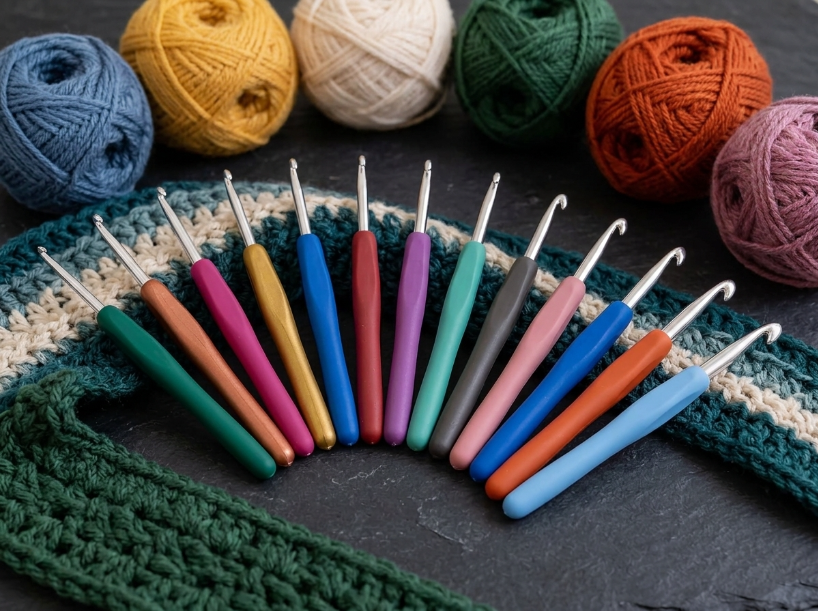
Crochet hook sizes can be labeled using letters, numbers, or millimeters, and the same hook may be identified differently depending on the sizing system. A US H hook is 5.0 mm, while a US J hook is 6.0 mm. Using the wrong size can change your gauge and finished dimensions.
The Short Answer
US sizes use letters (B-S), metric uses millimeters. A US J/10 equals 6.0mm. Using the wrong size changes your gauge and finished dimensions.
What to Look For
Match the hook to the yarn weight first. Worsted-weight yarn commonly falls within a range of hook sizes, often around 4.5–6.5 mm, but the appropriate size depends on the yarn, stitch pattern, and desired gauge. Moving up or down by 0.5–1 mm can change your gauge noticeably, but there is no fixed number of stitches that the change will produce. That difference compounds across a full project.
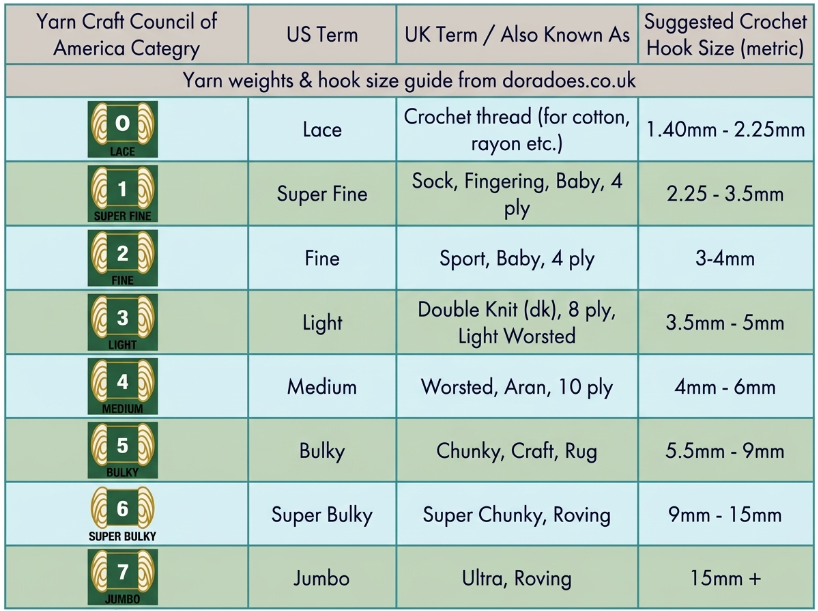
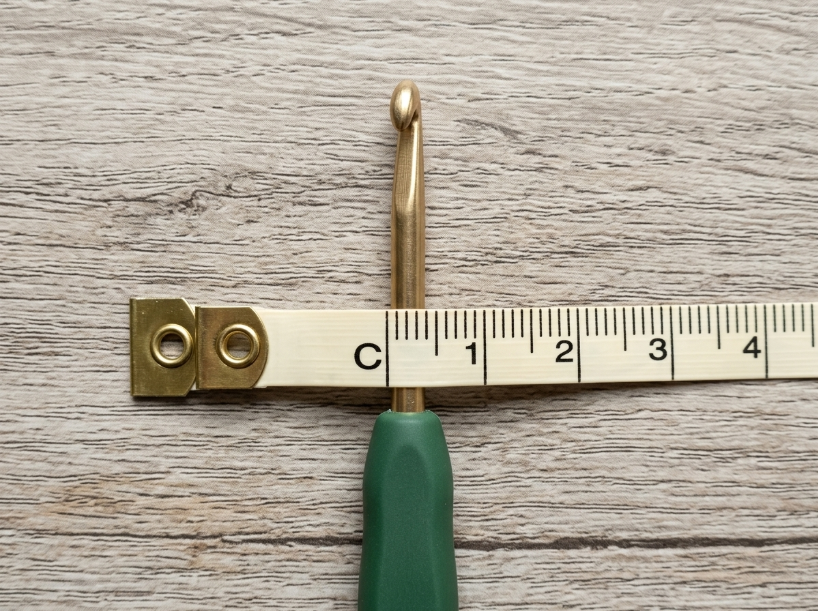
Because letter and number designations can vary between manufacturers, check the millimeter measurement rather than relying on the letter alone. The millimeter measurement is the most precise way to identify the actual hook diameter. The millimeter size is the most reliable standard.
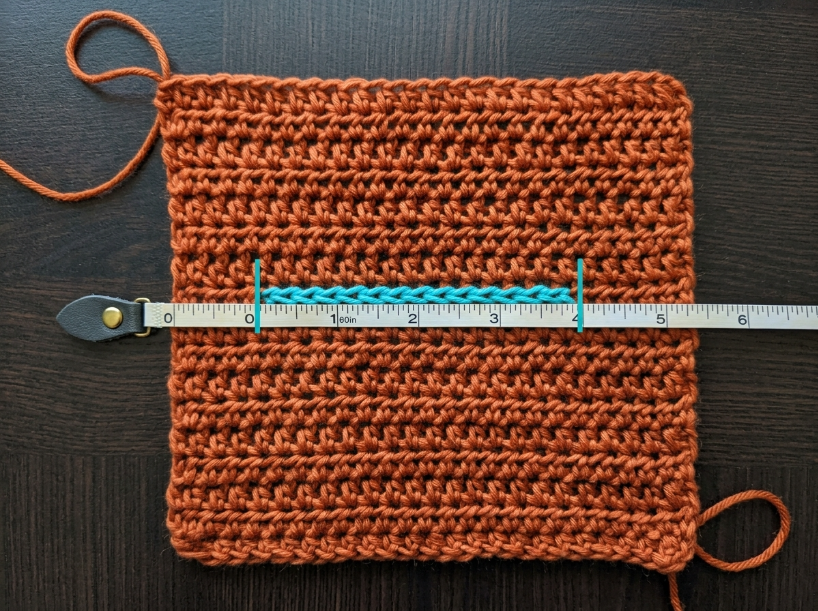
Use the pattern’s recommended size as a starting point, not a rule. If your tension runs tight, you will need to go up a hook size to match gauge. If your stitches are loose, go down. Patterns provide a target gauge because crocheters’ tension varies. If your swatch is larger than the pattern gauge, redo it with a smaller hook. If your swatch is smaller, use a larger hook.
Steel hooks are generally used for crochet thread and lace-weight yarn rather than standard yarn. Steel hooks use a reversed numbering system where higher numbers are smaller sizes. For standard yarn, stick to aluminum or ergonomic handles.
| Option | Best for | Main downside |
|---|---|---|
| US letter system (B-S) | American patterns, craft store shopping | Inconsistent labeling between brands |
| Metric (mm) | International patterns, precise matching | Less common on US yarn labels |
| Steel hooks (numbered) | Thread crochet, lace doilies | Reversed sizing (higher equals smaller) |
| Ergonomic handles | Long sessions, hand fatigue | Bulkier to store |
Side-by-Side Comparison
Many beginners grab the hook size printed on the yarn label and assume it is correct. That number is a suggestion based on average tension, and if your stitches run tighter or looser than average, your gauge will be off. The label gives you a starting point, not a guarantee.
Skipping the gauge swatch often leads to a sweater that does not fit. A 4-inch by 4-inch blocked swatch can tell you whether your hook size matches the pattern’s stitch count. Without it, you are guessing.
Using a hook one full size off changes your fabric density noticeably. A 5.0mm hook creates tighter stitches than a 6.0mm hook, and that difference can change the number of stitches and rows needed to reach a given finished dimension. For a blanket, that can mean several inches of size error.
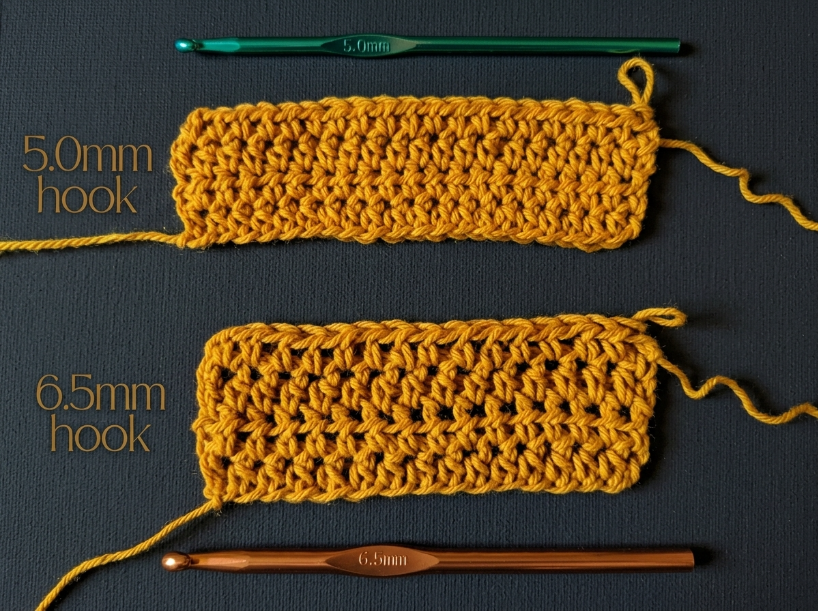
Trusting the letter alone without checking millimeters can cause mismatches when switching brands. Small differences in actual hook diameter can affect gauge, particularly when precise sizing matters.
Per-Option Analysis
A larger hook generally produces larger, more open stitches with the same yarn and tension, reducing fabric density. That is why going up a hook size makes fabric drape more and hold its shape less.
Metric sizing provides a direct diameter measurement, making it easier to compare hooks across brands. For precision, metric wins.
Steel hooks reverse the numbering because they are designed for fine thread work. A size 10 steel hook is smaller than a size 7, which is the opposite of how yarn hooks work. This system exists because thread crochet requires extremely small diameters that do not overlap with yarn hook sizes.
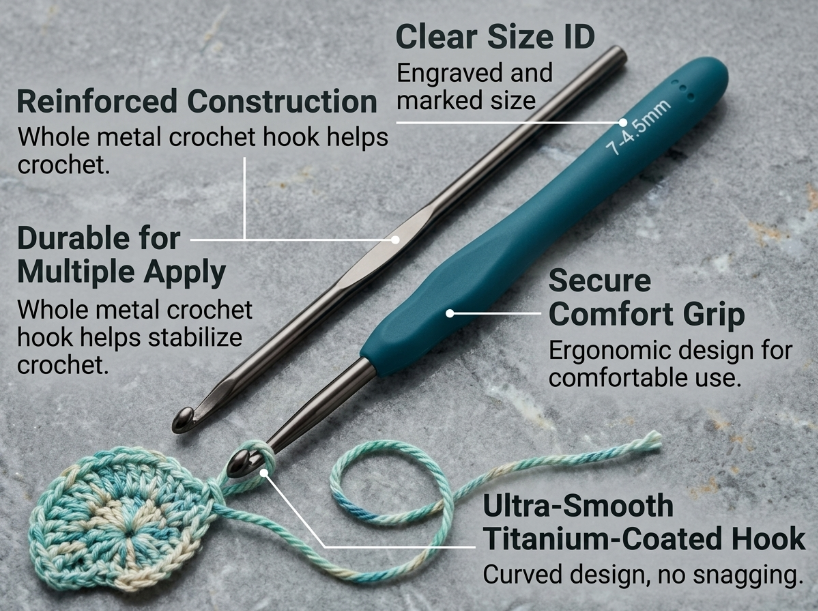
Ergonomic handles add cushioning and widen the grip, which reduces hand strain during long sessions. The tradeoff is bulk, since padded handles take up more space in a hook case. For occasional crocheters, standard aluminum handles work fine.
Which Should You Choose?
Buy metric-labeled hooks if you work from international patterns or want consistency between brands. For US-only patterns, either system works as long as you check the millimeter equivalent.
For a general starter collection, a range around 3.5 mm to 6.5 mm covers many commonly used yarn weights. You can add larger or smaller hooks as specific projects require them. Buying a full set upfront wastes money on sizes you may never use.
Upgrade to ergonomic handles only if standard hooks cause hand fatigue. The added cushioning helps during multi-hour sessions, but for short projects or occasional crochet, the extra cost is not justified. Test a single ergonomic hook before replacing your entire set.
Skip decorative or novelty hooks. Painted handles and embedded glitter look appealing but add no functional benefit, and the coating can wear off with regular use. Spend the money on accurate sizing and comfortable grips instead.
| If you want… | Choose |
|---|---|
| Consistent sizing across brands | Metric (mm) labeled hooks |
| To match most US patterns | US letter system with mm equivalent checked |
| Thread crochet or lace doilies | Steel hooks (numbered, reversed sizing) |
| Reduced hand strain during long sessions | Ergonomic padded handles |
| Budget-friendly starter set | Aluminum hooks in 3.5 mm to 6.5 mm range |
Questions You Might Still Have
Gauge varies with hook size, yarn brand, and individual tension. Two crocheters using the same hook and yarn can produce different stitch counts per 4 inches because of how tightly they hold the working yarn. That is why patterns specify gauge rather than assuming one hook size fits all.
Blocking a gauge swatch before measuring can show how the fabric behaves after the same finishing process you plan to use on the finished piece. Blocking can change the dimensions and fabric characteristics of a swatch, so measure it according to the pattern’s instructions.
Hook material affects grip and weight but not the actual stitch size. Aluminum hooks are lightweight and smooth, bamboo hooks have more grip, and steel hooks are heavier. The millimeter diameter determines stitch size, not what the hook is made from.
Some patterns list a hook size range instead of a single size because the designer tested multiple options. Use the smaller hook for denser fabric and the larger hook for more drape. Your tension and the specific yarn brand you are using determine which end of the range works better.
Still Deciding?
Q: Which hook sizing system is best for a beginner?
Start with a basic aluminum set labeled in both US letters and millimeters, covering 3.5 mm to 6.5 mm. This range handles most beginner-friendly yarn weights without requiring specialty hooks. Aluminum is lightweight and smooth enough to let stitches slide easily while you are still learning tension control.
Q: What is the difference between US and metric hook sizes?
US sizes use letters (B through S) that correspond to millimeter measurements, but the letter-to-millimeter match varies slightly between manufacturers. Metric sizing uses only millimeters, which is consistent across all brands. A 5.0mm hook consistently measures 5.0mm, while a US H hook might measure 4.75mm or 5.0mm depending on the manufacturer.
Q: Does hook material affect durability?
Hook longevity depends on the material, construction, and how the hook is used. The sizing system does not affect durability.
Q: Do metric or US hooks cost more?
Basic aluminum hooks cost the same whether labeled in US letters or metric millimeters. Sets labeled with both systems offer the best value because you can follow any pattern without conversion guesswork.
Q: When should I use a basic hook instead of an ergonomic one?
Standard aluminum hooks work better than ergonomic handles for fine thread crochet because the slimmer shaft gives you more control in tight spaces. Padded grips add bulk that makes it harder to maneuver a small steel hook through delicate lace stitches. For thread work, a basic steel hook outperforms cushioned handles.
Q: Can I switch hook sizes mid-project?
Switching sizes mid-project changes your gauge and creates visible lines where the stitch height shifts. If you need to adjust for tension issues, rip back to a natural break point like the end of a round or row rather than switching in the middle of a section. For colorwork or stitch pattern changes, a slight size adjustment is less noticeable.
📅 Last reviewed: August 2026 · This article is reviewed every 12 months.
Summary
US and metric systems both work, but metric sizing is consistent across brands. Match your hook to the yarn weight first, then adjust based on your tension and the pattern’s gauge requirements. If your stitches run tight, go up a size. If they are loose, go down. The pattern’s recommended hook is the designer’s starting point for achieving the stated gauge with the specified yarn. Your tension and yarn can produce a different gauge, so adjust the hook size if your swatch does not match.

