


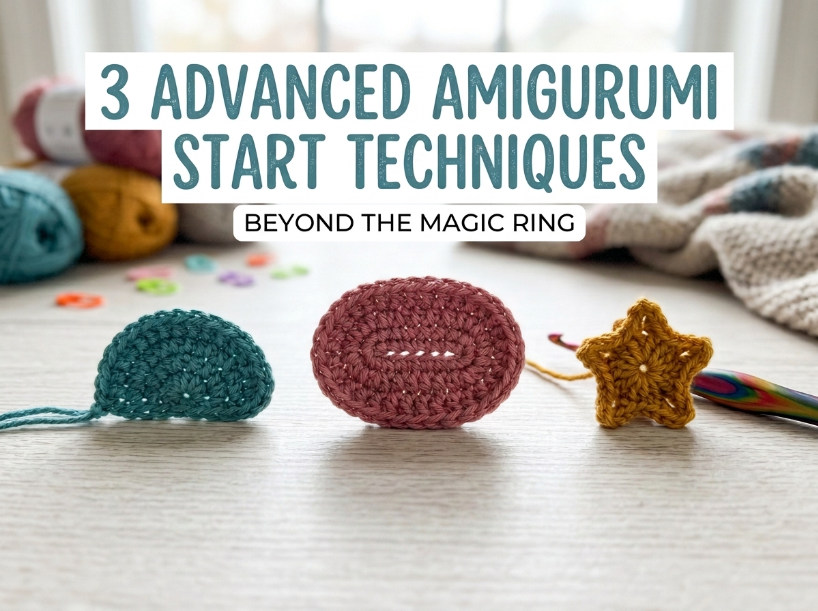
The magic ring earns its spot as the default amigurumi start because it cinches shut and hides stuffing, but it isn’t the only way to close a center hole cleanly. Three alternative starts solve the exact problems that trip crocheters up when the magic ring fights back, snaps fragile yarn, or creeps open after stuffing.
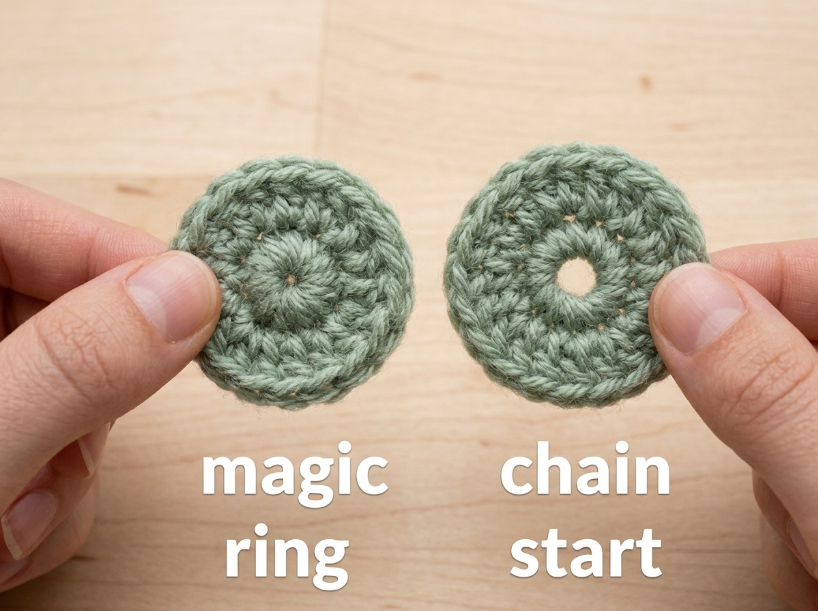
The Short Answer
The three most reliable magic ring alternatives are the Chain-2 Method (working into the second chain from the hook), the Double Magic Ring (two loops for extra friction), and the Needle Drawstring Closure (closing the center with a tapestry needle at the end). The best method depends on your fiber: for chenille or plush yarn that breaks under tension, the Chain-2 method is standard; for slippery bamboo or mercerized cotton that loosens over time, the Double Magic Ring or Needle Drawstring provides a permanent lock.
How We Chose These Alternatives
Most beginner guides recommend mastering the standard magic ring and stopping there. For tightly plied cotton or firm acrylic yarn, that advice holds up well. The ring cinches tight and stays closed under firm tension. The reason it works is that amigurumi uses tight stitches with a small hook relative to the yarn weight, creating enough friction against the starting tail to hold the loop shut.
However, two common yarn scenarios cause the standard magic ring to fail:
1. Fragile or Chenille Yarns: Pulling the magic ring tail on velvet, blanket, or chenille yarn creates friction that strips the fuzz off the core thread or snaps the yarn entirely.
2. Slippery Fibers: Smooth bamboo, silk blends, or loosely spun yarns slide easily, causing the cinched ring to slowly creep open once polyfill stuffing pushes against the inside of the piece.
Results vary with your hook size, personal tension, and stuffing firmness. Rather than forcing one universal start onto every project, choosing the right method for your specific yarn produces cleaner, longer-lasting results.
| Start Method | Best For | Main Tradeoff | Security Level |
|---|---|---|---|
| Chain-2 Method (Ch 2, work into 2nd ch) | Chenille/plush yarn, beginners | Leaves a tiny pinhole center gap | Moderate (great for plush yarn) |
| Double Magic Ring (Two-loop wrap) | Slippery fibers (bamboo, mercerized cotton) | Requires managing two sliding loops | High (resists pulling open) |
| Needle Drawstring Closure (Sewn tail) | Heavily stuffed toys, high-wear play items | Adds a quick finishing step with a needle | Maximum (permanent mechanical lock) |
Detailed Breakdown of the 3 Methods
1. The Chain-2 Method (Beginner-Friendly & Snapping Prevention)
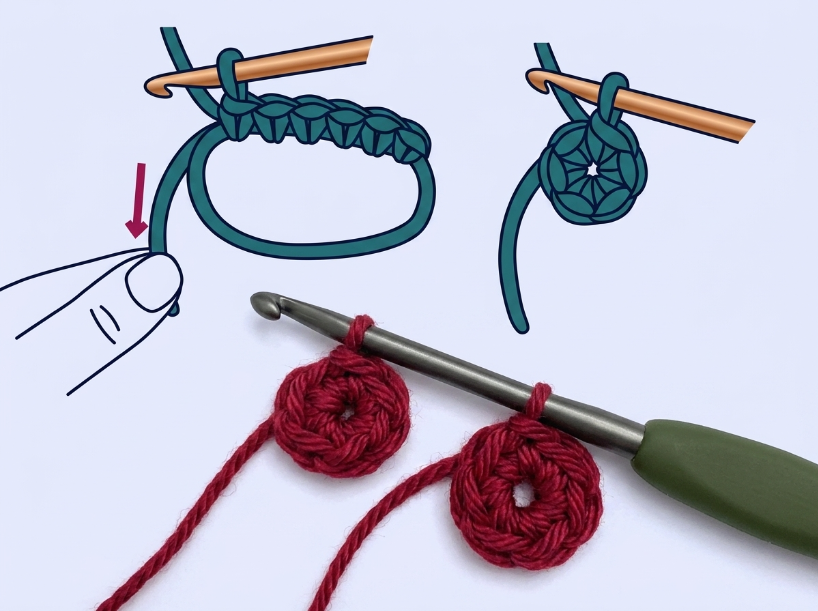
To work the Chain-2 method, make a standard slip knot on your hook, chain 2, and work all first-round single crochet stitches directly into the second chain from your hook.
Because you are working into a fixed chain stitch rather than a moving loop, there is no drawstring mechanism to pull. This completely eliminates the risk of snapping fragile chenille or blanket yarn. The tradeoff is that a fixed chain cannot cinch down to zero, leaving a tiny pinhole gap at the center. On fuzzy plush toys, the yarn halo hides this gap naturally; on smooth cotton, you can use the starting yarn tail to weave the hole shut from the inside.
2. The Double Magic Ring (Slippery Fiber Lock)
The Double Magic Ring is worked like a standard adjustable ring, but you wrap the yarn around your fingers twice instead of once before pulling up your first loop. When you complete Round 1, you pull the yarn tail slightly to see which of the two interior loops moves, pull that loop snug to close the first ring, and then pull the tail to lock the second ring.
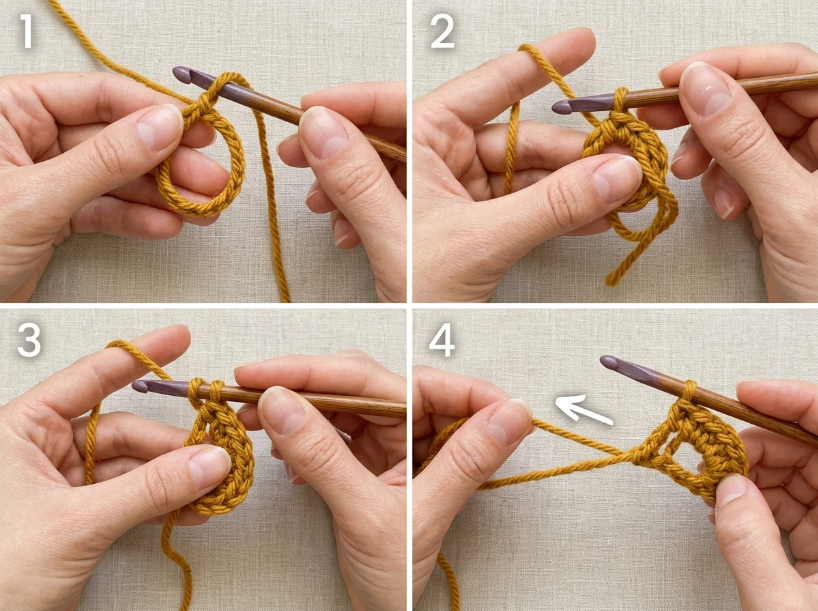
The double strand creates twice the surface friction of a standard magic ring. For slick cotton or rayon blends that tend to slide open under stuffing pressure, this double wrap holds its tension permanently. The downside is the learning curve: pulling the wrong loop first will lock the mechanism before the center closes completely.
3. The Needle Drawstring Closure (Heavily Stuffed & High-Wear Toys)
With this method, you work your first round into a loose chain loop without pulling it tight right away. After completing a few rounds, you thread the starting yarn tail onto a blunt tapestry needle, weave through the front loops of each Round 1 stitch in a circle, and pull snug like a drawstring bag before knotting and weaving the tail inside.
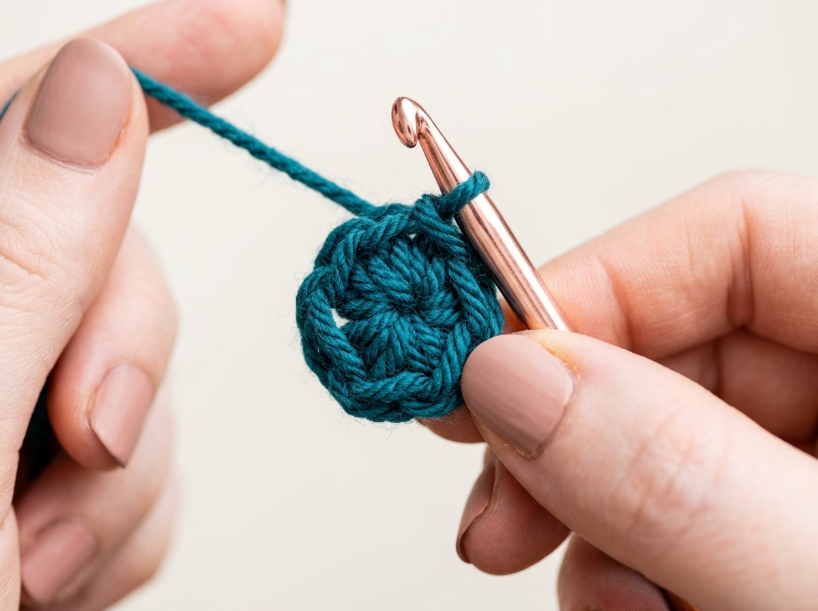
Because sewn yarn is locked through the base of the stitches, it physically cannot slide open the way an unanchored slip loop can. For toys that will be laundered or handled roughly by children, this provides the most secure foundation. How stuffing pressure stresses seams over time is covered in Amigurumi Durability Test: Why Crochet Toys Sag & How to Fix It.
Side-by-Side Comparison: Matching Start to Fiber
| Yarn / Fiber Type | Common Problem with Magic Ring | Recommended Alternative Start |
|---|---|---|
| Chenille / Blanket / Velvet Yarn | Snaps or strips fuzz when pulled tight | Chain-2 Method (No pulling required) |
| Slick Cotton / Bamboo / Silk Blend | Loop slides open after stuffing | Double Magic Ring or Needle Drawstring |
| Standard Acrylic / Worsted Wool | Works well, but can feel fiddly for beginners | Standard Magic Ring or Chain-2 Method |
| Large Plushies / Heavy Polyfill Toys | Internal stuffing pressure pushes hole open | Needle Drawstring Closure |
Which Should You Choose?
* If your yarn breaks when cinching: Use the Chain-2 Method. It requires no tension pulling and works smoothly with delicate or high-friction plush yarns.
* If your center hole creeps open after stuffing: Use the Needle Drawstring Closure or the Double Magic Ring. Both prevent smooth yarns from sliding loose under internal pressure.
* If you struggle to hold a shifting loop: Use the Chain-2 Method to anchor your stitches into a stable foundation from stitch one.
Frequently Asked Questions
Q: What skill level do I need to try these three starts?
Basic familiarity with single crochet and working in continuous rounds is plenty. The Chain-2 method is the easiest and suits absolute beginners, while the Double Magic Ring takes a couple of practice attempts on scrap yarn to master the two-loop pull sequence.
Q: Can I use the Chain-2 method for every amigurumi pattern?
Yes. Almost every pattern that calls for “6 sc in magic ring” can be substituted with “ch 2, 6 sc in 2nd ch from hook.” If a tiny center pinhole is visible on smooth yarn, use a yarn needle to weave the starting tail around the base of the stitches to close it completely.
Q: Why does my magic ring keep reopening even after I pulled it tight?
Slippery fibers (such as mercerized cotton or bamboo) lack the surface grip needed to hold an unfastened tail in place. When polyfill stuffing is packed inside the head, outward pressure pushes the center stitches apart. Weaving the starting tail securely in multiple directions with a tapestry needle prevents this slippage.
Q: Which one is hardest and which is easiest?
The Chain-2 method is the easiest because you work into a stable chain without managing moving loops. The Double Magic Ring has the steepest initial learning curve because you must identify and pull the correct interior loop first to cinch both strands evenly.
📅 Last reviewed: August 2026 · This article is reviewed every 12 months.

