


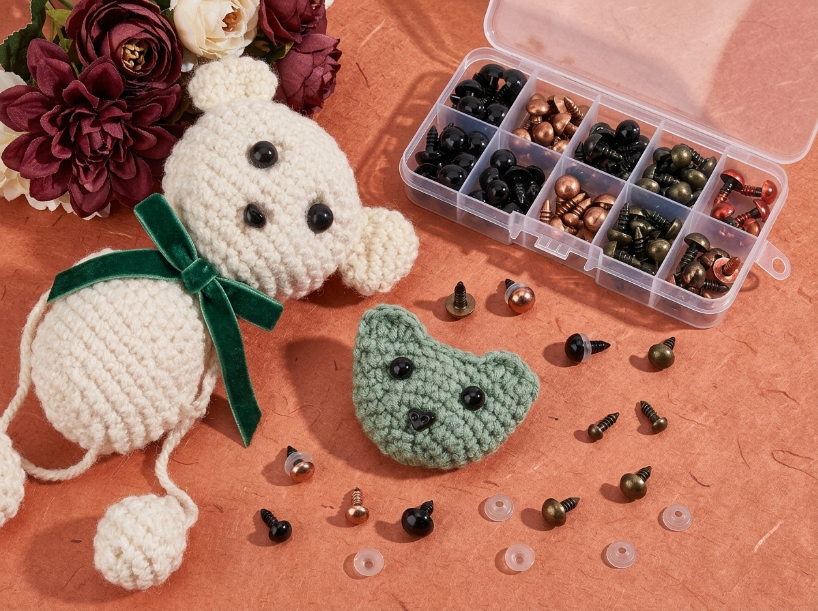
Most patterns assume the stuffing and eyes you choose are safe, but the label “toy stuffing” doesn’t guarantee anything by itself. Polyester fiberfill without third-party verification has not been independently evaluated for residual processing chemicals, and plastic safety eyes can present choking hazards if stitches stretch or if they are given to very young children. The materials and construction methods you pick determine whether a finished toy is durable and age-appropriate.
The Short Answer
Certified polyester fiberfill (such as fiber tested under OEKO-TEX Standard 100, Product Class 1) is a practical, resilient stuffing choice for most amigurumi because it has been tested for specified harmful substances, tolerates gentle machine washing, and maintains its shape well over time. Embroidered features eliminate the risk of detachable rigid small parts for toys intended for children under three years old. Safety eyes with washer backings can be suitable for older children, but they must be positioned before stuffing because the washer is difficult to remove once locked without damaging surrounding stitches.
What to Look For
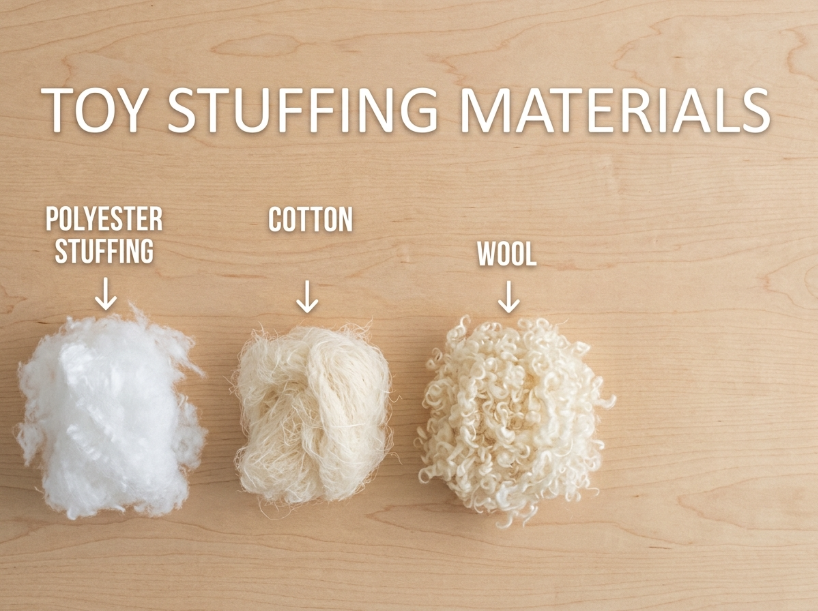
Third-party testing programs verify that a textile material has been evaluated for specific harmful substances. OEKO-TEX Standard 100 (Class 1 for baby articles) confirms the stuffing has been tested against a defined list of chemicals and heavy metals. Fiberfill without a certification label simply hasn’t undergone that specific testing program. Many widely available craft store brands, such as Fairfield Poly-Fil Premium, carry this certification and are stocked on store shelves for around $4-$8 per pound.
Organic cotton stuffing is a natural plant-based option for crafters who prefer to avoid synthetic polymers. The reason it is less common for general three-dimensional amigurumi is that cotton fibers compress and settle more than polyester over time, meaning a firmly stuffed piece can lose some of its original volume after repeated handling or washing. That said, cotton works well for flatter projects like play mats, rattles, or soft books where loft retention is not critical. If you are making a three-dimensional toy that will be laundered frequently, polyester’s spring-back resilience is generally more practical.
Wool roving provides natural loft and warmth, but untreated animal fibers felt and shrink when exposed to heat, moisture, and agitation in a washing machine. For this reason, wool stuffing is best suited for decorative pieces, heirloom collectibles, or projects intended strictly for spot cleaning. For a deeper comparison of how different materials hold up under use, Amigurumi Durability Test: Why Crochet Toys Sag & How to Fix It covers long-term wear patterns including how stitch tension and stuffing density interact to prevent sagging in high-wear areas like limbs and necks.
| Option | Best For | Main Downside | Price / Effort |
|---|---|---|---|
| Certified Polyester Fiberfill (OEKO-TEX Class 1) | Machine-washable toys, durable amigurumi | Synthetic fiber | $4-$8 per pound |
| Organic Cotton Stuffing (GOTS certified) | Natural fiber baby toys, flat projects | Compresses over time, loses loft | $15-$25 per pound |
| Wool Roving | Heirloom display toys, decorative pieces | Felts and shrinks when machine-washed | $20-$30 per pound |
| Embroidered Eyes (Yarn / Thread) | Toys intended for children under 3 years | Requires hand stitching practice | $0 (uses project yarn) |
| Plastic Safety Eyes with Washers | Toys for older children (3+ years) & display | Choking hazard if pulled through loose stitches | $0.10-$0.50 per pair |
Side-by-Side Comparison
Certified polyester fiberfill is the most versatile option because it maintains loft after washing, resists packing down under normal handling, and costs less per project than organic alternatives. An OEKO-TEX Standard 100 Class 1 label confirms the fiber has been tested for specified harmful substances without requiring special care instructions. Certified brands like Fairfield Poly-Fil Premium and Morning Glory are widely stocked in major craft stores (Michaels, Joann, Walmart) for around $4-$8 per pound.
However, polyester’s resilience comes with a tradeoff. Because it is a petroleum-based synthetic, it will not biodegrade in landfills and releases microplastic fibers during washing. If environmental impact is a priority, organic cotton or wool may align better with your values despite their higher cost and care requirements.
Organic cotton stuffing is a suitable choice when the maker prefers natural plant materials or when crafting for someone with synthetic sensitivities. The tradeoff is that cotton absorbs moisture and compacts with pressure, meaning a cotton-stuffed amigurumi body will gradually settle with regular use and laundering. If the project is a small rattle or baby lovey that won’t be squeezed heavily, cotton’s compression is minor. For larger plush toys that require lasting firmness, polyester’s resilience makes more sense.
Wool roving requires gentle hand-washing and air-drying to prevent felting. The natural protein structure of wool provides higher ignition resistance than untreated synthetics, but its tendency to felt and clump when machine-washed makes it impractical for toys that will be laundered frequently. That said, for a decorative nursery piece or heirloom doll that will be spot-cleaned only, wool’s natural loft and warmth create a luxurious hand feel that polyester cannot match.
Per-Option Analysis
Plastic safety eyes with washer backings are secure when installed correctly into dense, tight crochet stitches, but they become a permanent feature once the washer snaps onto the ridged post. The washer locks from the inside of the crochet fabric, which means you must position the eyes before stuffing. If you place them unevenly, removing them usually requires cutting the post with wire cutters and discarding the eye. The safest approach is pinning the eyes temporarily with yarn scraps, checking alignment from the front and sides, and snapping the washer only when you are certain of the placement.
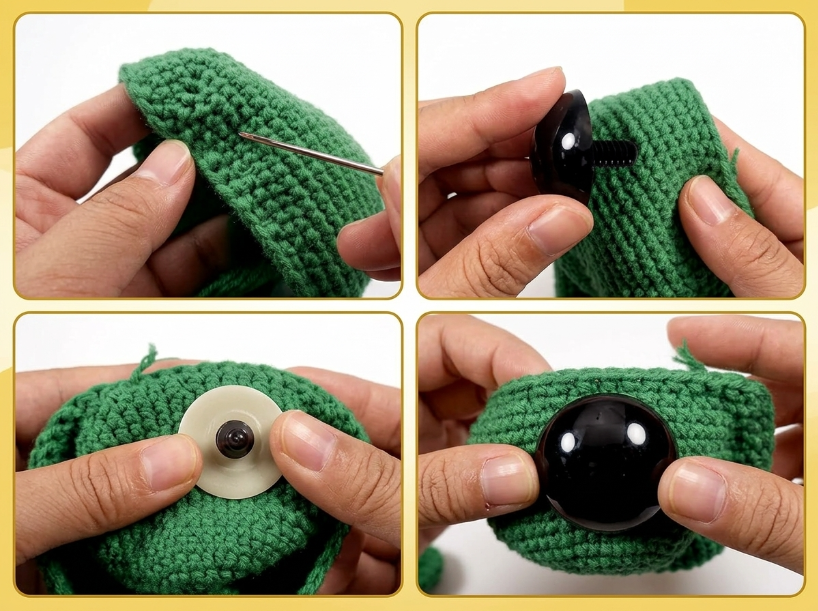
The main limitation is that safety eyes rely entirely on the surrounding crochet fabric to hold them in place. If your gauge is loose (larger than 4 stitches per inch in worsted weight yarn), the post can pull through the fabric under stress. For toys intended for children who mouth objects, this presents a choking hazard. If your tension tends loose, embroidered eyes are the safer choice.
Embroidered eyes avoid separate rigid pieces entirely because they are stitched directly into the core fabric using project yarn or cotton embroidery floss. Creating neat satin stitches or French knots takes additional stitching time, but embroidered features eliminate the small-part choking hazard associated with plastic hardware. Toy safety standards (such as CPSC 16 CFR 1501 in the U.S. and EN71 in Europe) restrict detachable rigid small parts on toys intended for children under three years old, making embroidery the standard craft recommendation for this age group.
The downside is that embroidery requires practice to achieve even, symmetrical features. If you are new to surface embroidery, your first attempts may look uneven or puckered. If hand stitching feels too time-consuming, felt eyes secured with fabric glue are faster, though less durable under washing as glue bonds can weaken over time. Felt works for display pieces or adult collectibles, but stitched features are more reliable for functional toys.
Common Mistakes
Installing safety eyes after stuffing is the most frequent error. Once the body is filled, you cannot reach inside to snap the washer onto the post without unstuffing the entire piece. Always position and lock safety eyes before you begin filling the toy.
Using craft store “toy stuffing” without checking for third-party certification assumes the fiber has been tested for harmful substances. Many generic polyester fiberfills have not undergone independent testing. Look specifically for OEKO-TEX Standard 100 (Product Class 1) or similar certification labels on the packaging.
Assuming tight stitches alone will hold safety eyes securely overlooks the fact that crochet fabric stretches over time, especially under repeated pulling or chewing. For toys intended for children under three, embroidered features are safer regardless of stitch tension.
Overstuffing amigurumi to achieve firmness can stretch the crochet fabric and widen the gaps between stitches, making it easier for safety eyes to pull through. Firm stuffing should fill the shape without distorting the stitch definition. If you can see large gaps between stitches after stuffing, the piece is overfilled.
Troubleshooting
If safety eyes feel loose after installation, the washer may not have snapped fully onto the ridged post. Remove the washer, check that the post ridges are intact, and press the washer firmly until you hear or feel a click. If the post was damaged during installation, discard the eye and use a new one.
If embroidered eyes look uneven or puckered, the tension on your embroidery stitches may be too tight. Work satin stitches with gentle, consistent tension, allowing the thread to lie flat against the surface rather than pulling the fabric inward. Practicing on a swatch before stitching the final toy helps develop even tension.
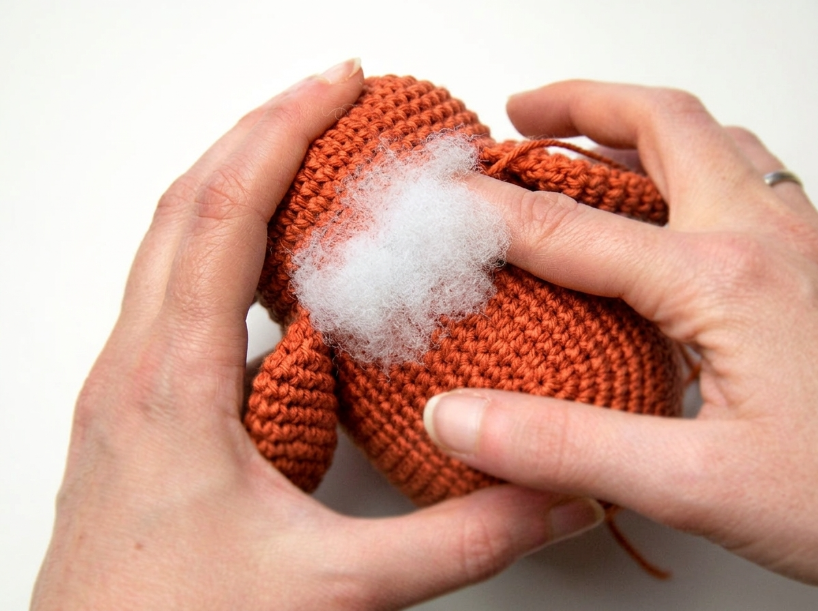
If polyester fiberfill clumps or forms lumps inside the toy, you are likely inserting large handfuls at once. Pull the fiberfill into small, fluffy pieces and add them gradually, using a stuffing tool or the eraser end of a pencil to distribute the fiber evenly into corners and limbs.
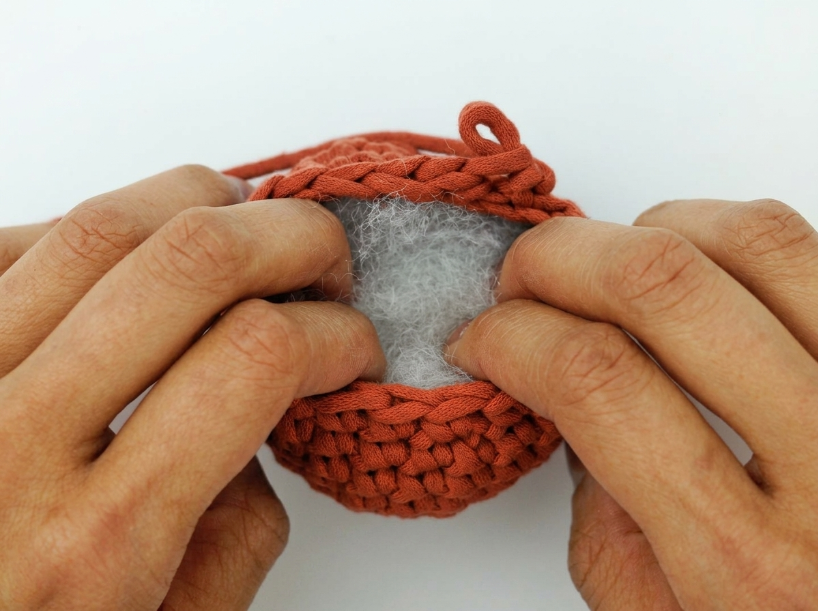
If cotton stuffing compresses noticeably after washing, the toy was either understuffed initially or the cotton was not pre-washed. Pre-washing organic cotton stuffing before use allows it to shrink and settle, reducing the amount of compression that occurs after the toy is laundered.
Which Should You Choose?
| If you want… | Recommended Stuffing | Recommended Facial Features |
|---|---|---|
| A toy for children under 3 years | Tested polyester fiberfill or organic cotton | Embroidered eyes (yarn or cotton thread) |
| A durable toy for children 3+ years | Polyester fiberfill (tight crochet tension) | Plastic safety eyes with locking washers |
| A machine-washable everyday toy | Washable polyester fiberfill | Embroidered features or firmly locked safety eyes |
| A natural fiber baby gift | Certified organic cotton stuffing | Embroidered organic cotton thread eyes |
| An heirloom or decorative piece | Wool roving, cotton, or polyester | Safety eyes, glass eyes, or embroidery based on preference |
For toys intended for children under three years old, embroidered eyes are the standard recommendation because plastic safety eyes can pull through stretched crochet stitches under chewing or pulling. That said, if you are making a display piece or gift for an adult collector, plastic safety eyes offer a polished, uniform appearance with less hand-stitching time. For children three years and older, plastic safety eyes with washer backings are fast to install and hold securely under normal play, provided the surrounding crochet stitches are tight and firm.
Note on Commercial Toy Safety: While choosing tested stuffing and embroidered features is good craft practice, raw material certifications do not officially certify a finished handmade toy for commercial sale. Commercial toy safety regulations (CPSC in the U.S. and EN71 in the EU) require testing on the complete finished item, including seam strength and pull tests.
Frequently Asked Questions
Q: Which option is better for a beginner starting with toy-safe materials?
Polyester fiberfill and embroidered yarn eyes are a forgiving starting combination because polyester distributes easily and embroidery can be unpicked and restitched if the placement is uneven. Plastic safety eyes are permanent once snapped, making them less forgiving if placement is misjudged. That said, if you are comfortable with measuring and marking eye placement with pins before locking the washer, safety eyes are faster to install than embroidery.
Q: What are the main differences when comparing stuffing materials for amigurumi?
Polyester maintains loft and shape after washing. Cotton is a natural plant fiber that tends to compress over time. Wool provides dense natural loft but felts into hard clumps if machine-washed. The OEKO-TEX Standard 100 (Product Class 1) label confirms that synthetic or natural fibers have been independently tested for harmful substances. In practice, certification does not address biodegradability or microplastic shedding, so if environmental impact matters to you, organic cotton or wool may be preferable despite higher cost.
Q: Which version of facial features lasts longer with regular use?
Plastic safety eyes maintain a uniform, glossy appearance and hold up well if the crochet fabric is tightly worked. Embroidered features stitched into the core fabric cannot detach, though surface yarn fibers may experience normal surface wear over years of laundering. For toys that will be washed frequently, embroidered eyes made with cotton embroidery floss (rather than acrylic yarn) hold their color and definition better.
Q: Which approach to toy materials costs less overall?
Embroidered eyes use yarn already on hand, making them the most economical choice. Certified polyester fiberfill costs around $4-$8 per pound at major craft stores, whereas organic cotton ($15-$25 per pound) and wool roving ($20-$30 per pound) carry higher material costs. Even so, the price difference becomes less significant for small projects like rattles or keychains, where a single pound of any stuffing will complete dozens of toys.
Key Takeaways
Certified polyester fiberfill (OEKO-TEX Standard 100, Product Class 1) is the most practical stuffing for machine-washable amigurumi because it maintains loft, resists compression, and has been tested for harmful substances. Organic cotton is a natural alternative that compresses over time, making it better suited for flat projects or toys that will be gently handled. Wool roving requires hand-washing to prevent felting and is best reserved for decorative or heirloom pieces.
Embroidered eyes are the safest choice for toys intended for children under three years old because they eliminate detachable small parts. Plastic safety eyes with washer backings are faster to install and work well for older children and display pieces, but they must be positioned before stuffing and rely on tight crochet tension to stay secure.
Always install safety eyes before stuffing, check for third-party certification labels on fiberfill packaging, and avoid overstuffing to prevent stitch distortion. For toys intended for commercial sale, raw material certifications do not replace finished product safety testing required by CPSC or EN71 regulations.
📅 Last reviewed: August 2026 · This article is reviewed every 12 months.

