


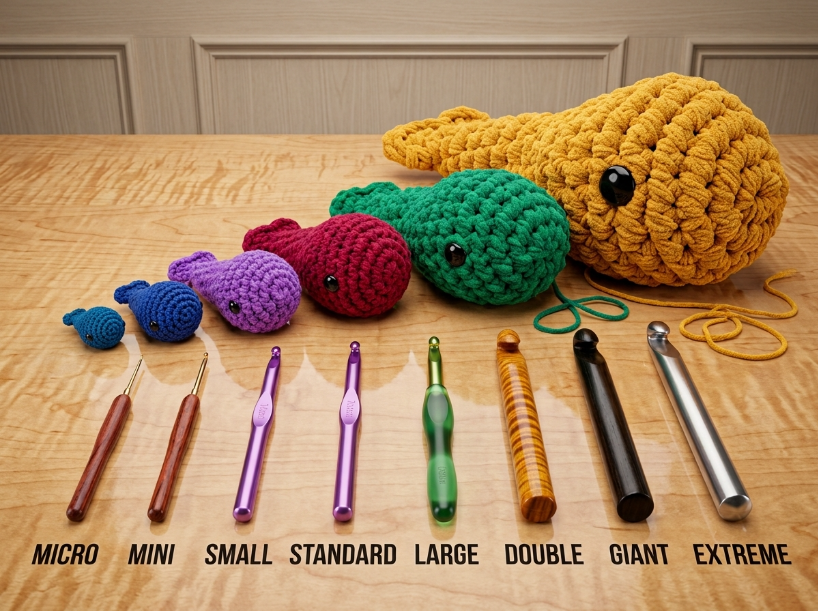
The same stitch pattern that creates a delicate 1-inch miniature animal can also produce a 3-foot huggable plushie. While changing your hook size and yarn weight is the foundation, managing tension and understanding 3D geometry determine whether a scaled piece holds its shape or collapses under internal stuffing pressure.
The Short Answer
One of the simplest ways to resize an amigurumi is Material Scaling – working the original pattern with a different yarn weight and an appropriately sized hook (from size 10-80 thread with steel hooks for micro-crochet, up to bulky chenille yarn with large hooks for giant plushies). Micro-crochet demands firm, consistent tension to avoid visible stitch distortion, while giant plushies need a sufficiently dense fabric to prevent stuffing from showing through and to help the structure support its own weight.
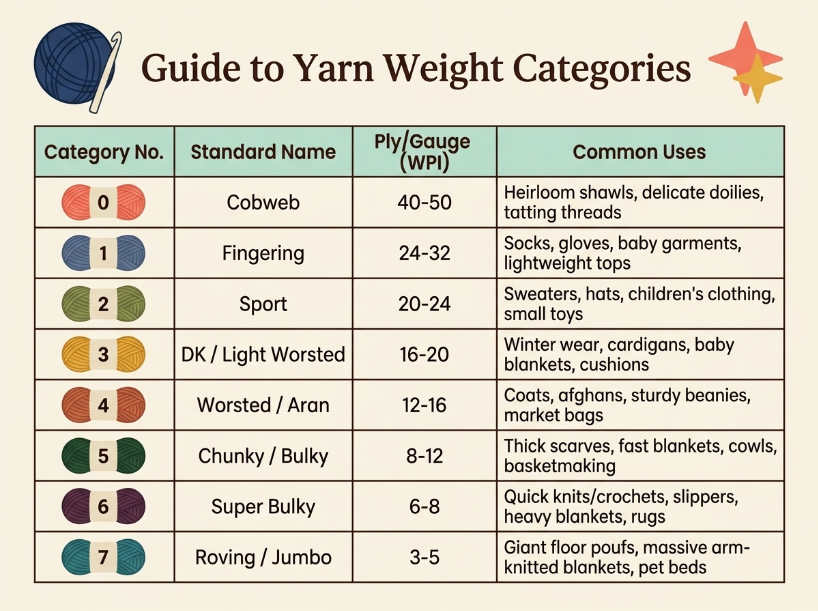
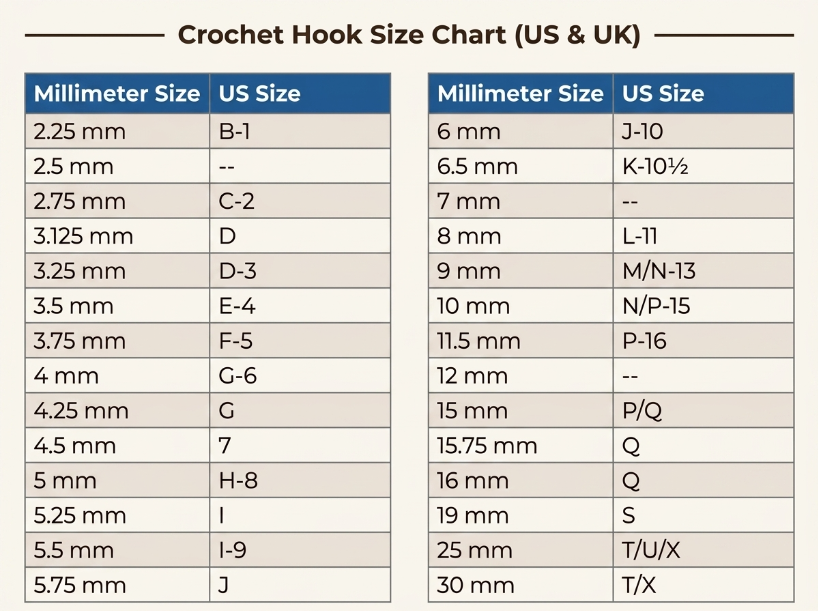
crochet hook sizes comparison Us vs UK
What to Look For: Testing 3D Gauge
Most general crochet guides recommend swatching a flat square to check gauge. While flat swatches work for blankets and garments where drape matters, flat swatches do not always predict how a stuffed 3D piece will behave. Stitched fabric stretches differently when worked in a continuous round and packed with internal polyfill.
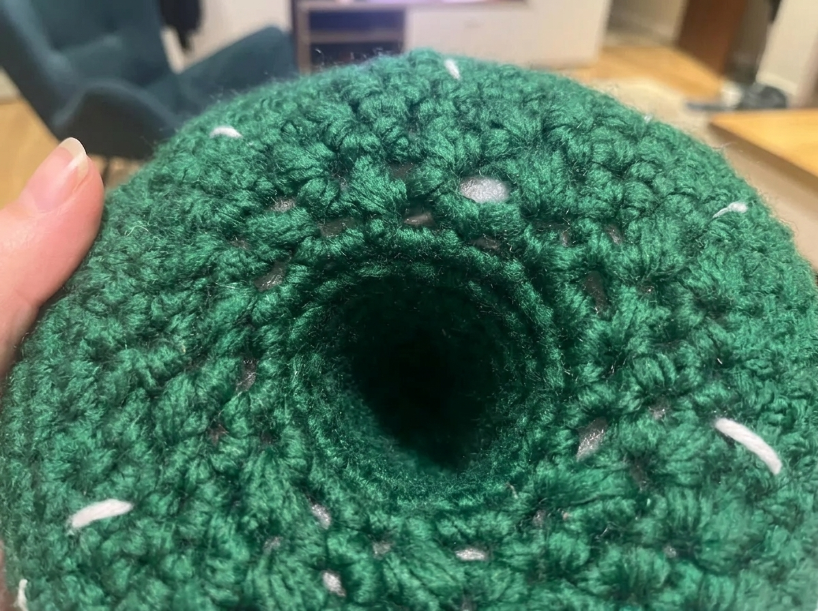
To test amigurumi gauge at any scale, crochet a small sphere (such as 6 sc in ring, increasing to 12, then 18, working two even rounds, and decreasing back down). Stuff it firmly and check whether gaps appear between stitches. If you can see white stuffing peeking through, test a smaller hook or tighten your working tension until the fabric is solid.
* Micro-Crochet Precision: At a 1-inch scale, a single loose stitch creates an obvious bulge. Thread work demands consistent tension across every single pull.
* Giant Plushie Structure: While large stitches can hide minor tension variations, giant plushies can contain several pounds of stuffing depending on their dimensions. If your tension is too loose, the physical weight of the filling will cause the lower body and limbs to sag over time.
| Scale Category | Typical Hook Range | Recommended Yarn / Thread | Target Tension Profile | Primary Challenge |
|---|---|---|---|---|
| Micro-Crochet (Under 2 inches) | 0.6mm to 1.5mm steel hooks | Size 10 to 80 crochet cotton thread | Very firm, uniform stitch height | Hand fatigue and optical focus |
| Standard Amigurumi (3 to 6 inches) | 2.5mm to 3.5mm hooks | DK or Worsted weight yarn | Snug enough to hide stuffing | Balancing firmness with ease of stitching |
| Giant Plushies (15 to 36+ inches) | 10mm to 20mm large hooks | Bulky, jumbo chenille, or multi-strand | Structured and dense, not overly tight | Managing physical weight and yarn drag |
Side-by-Side Comparison: Micro vs. Giant Mechanics
1. Decrease Techniques Across Scales
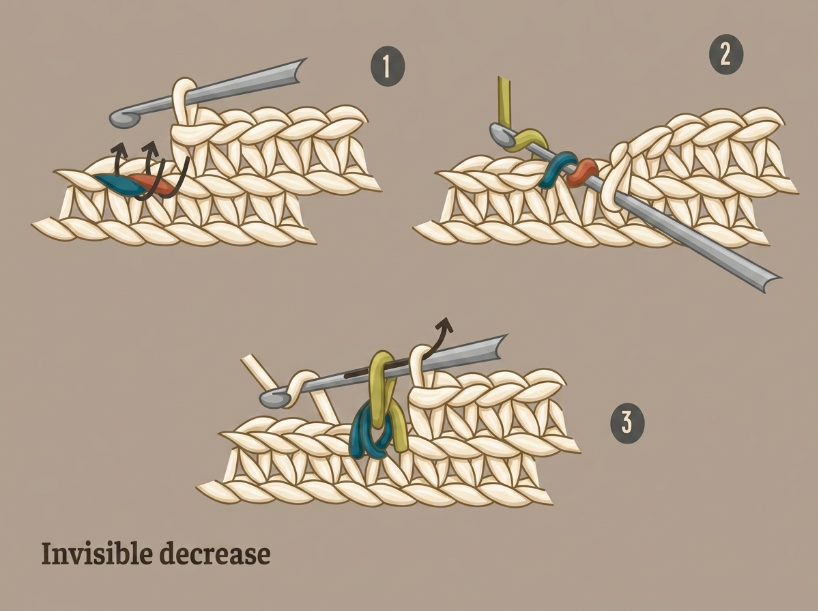
Micro-crochet can benefit from invisible decreases (working through front loops only) because standard single crochet decreases may be more noticeable at a tiny scale. On giant plushies, both standard decreases and invisible decreases work, though the invisible decrease continues to provide a smooth, flat surface on bulky blanket yarns.
2. Magic Ring Mechanics
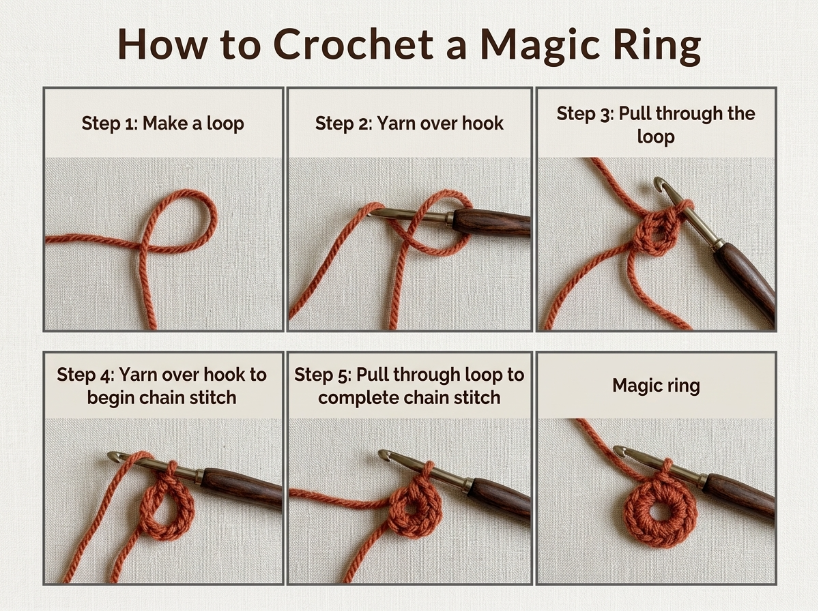
The magic ring functions across different yarn weights, but handling differs at extreme scales:
* With fine crochet thread, the magic ring can close neatly, but very thin or fragile threads should be tightened gradually rather than pulled abruptly to prevent snapping.
* In giant plushies made with chenille or velvet yarns, pulling the magic ring tail too quickly can strip the fuzzy coating off the core strand (friction burn). Crocheting the initial ring slightly looser before gently easing the loop shut, or using the Chain-2 method, prevents yarn damage.
3. Internal Pressure and Weight Distribution
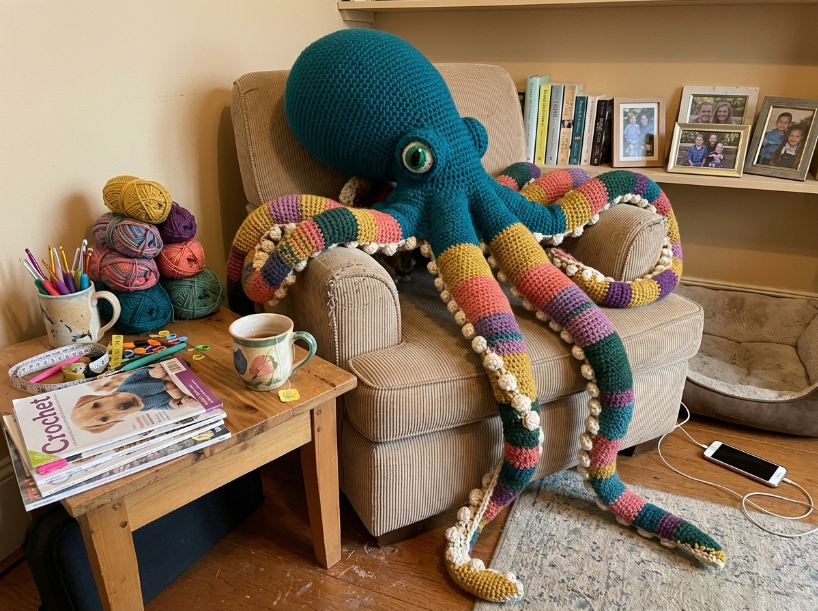
Micro-crochet pieces use very little stuffing, so internal weight and stuffing pressure are much lower than in giant plushies. Giant plushies, however, hold substantial stuffing volume. Without dense stitch tension, the physical weight of the filling pushes against the lower rounds, causing the plushie to distort when seated. Testing a hook smaller than the yarn label recommendation helps ensure the fabric walls remain supportive.
Two Ways to Scale Patterns
| Scaling Approach | How It Works | Best Use Case | Key Advantage |
|---|---|---|---|
| Material Scaling (Direct Swap) | Work the original pattern with different yarn and hook sizes | Scaling from micro up to giant plushies | Preserves the original stitch sequence and shaping with minimal pattern math |
| Stitch-Count Scaling (Mathematical) | Multiply stitch counts and row counts while using the same yarn weight | Making a bigger piece using standard worsted yarn | Lets you create large toys with standard yarns |
When using Material Scaling, the stitch-count structure remains the same regardless of yarn thickness, but the physical proportions can change with yarn elasticity, hook size, and tension. When using Stitch-Count Scaling with standard yarn, scale both the circumference (total stitch count) and the height (number of even rounds) proportionally to maintain proper sphere and cylinder ratios.
Troubleshooting Scaling Problems
| Problem | Root Cause | Practical Fix |
|---|---|---|
| Stuffing shows through stitches | Hook is too large for the chosen yarn weight | Test a smaller hook size until gaps disappear under firm stuffing |
| Fabric is stiff and causes hand cramps | Forcing extreme tension instead of using the correct hook | Go up one hook size and let natural stitch density create structure |
| Giant plushie leans or sags | Insufficient internal support and loose base tension | Work base rounds firmly and pack stuffing evenly in the lower torso |
| Stitch drift in continuous spirals | Round start naturally shifts around the piece | Use shift stitches to realign symmetrical features and limb placements |
Frequently Asked Questions
Q: Which scale is best for a beginner to start with?
Standard-scale amigurumi using worsted weight yarn (Category 4) and a 3.5mm hook is the most approachable starting point. It builds essential muscle memory for stitch tension and round counting without the optical strain of micro thread or the wrist fatigue of heavy bulky yarn.
Q: Do I need special tools for micro-crochet?
Beyond steel crochet hooks (sizes 0.75mm to 1.25mm) and cotton thread (sizes 10 to 30), good task lighting and a magnifying craft lamp significantly reduce eye strain. Fine-tip embroidery scissors and thin sewing needles are essential for weaving micro tails.
Q: Why does a giant plushie use so much more stuffing than expected?
Volume scales cubically. If you double the height and width of a plushie (2x scale), the internal volume increases by roughly 8 times (2³), assuming the shape and proportions remain similar. A giant plushie that is three times larger in dimensions requires approximately 27 times (3³) more stuffing by volume than the original small toy.
Q: Can I hold multiple strands of yarn together to make a giant plushie?
Yes. Holding multiple strands of worsted yarn together can be an economical way to create a bulky fabric, with the hook size adjusted to the combined yarn thickness and the density you want.
📅 Last reviewed: August 2026 · This article is reviewed every 12 months.

