


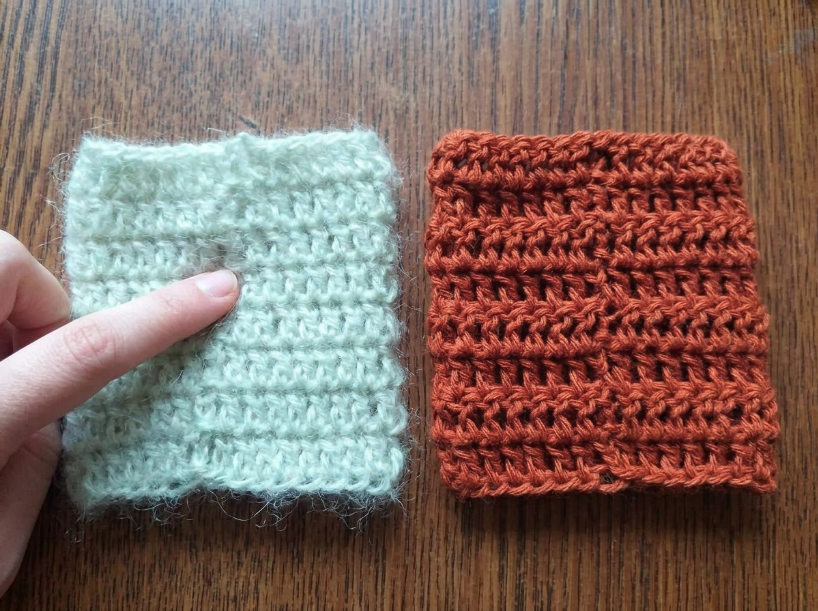
Yarn structure determines whether a finished piece holds its shape or drapes naturally, and the difference becomes obvious the moment you pick up the hook. Yarn characteristics such as fiber, twist, loft, and elasticity influence whether a finished piece holds its shape or drapes naturally. Smooth, firmly spun yarns often show stitch definition more clearly, while lofty or fuzzy yarns can soften or obscure individual stitches.
The Short Answer
Soft, lofty, or flexible yarns can produce comfortable fabrics with good drape, making them useful for many wearables and blankets. Smooth, firmly spun yarns often provide clearer stitch definition and a more stable fabric, which is why they are commonly used for amigurumi and textured patterns.
Why This Matters
Most guides recommend soft yarn for anything that touches skin and sturdy yarn for anything that needs structure. That advice holds for a scarf or a stuffed toy, but it breaks down when the project sits between extremes. A market bag worked in a soft, elastic yarn may stretch out of shape under repeated loads, while a baby blanket worked in stiff cotton can feel less comfortable against delicate skin. The choice depends on whether you need the fabric to move with the body or stay rigid under stress.
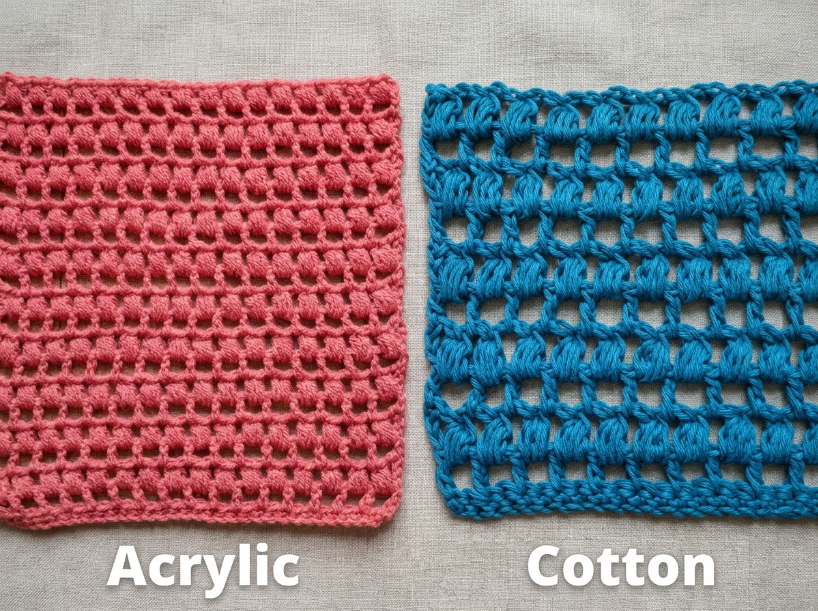
Results vary with hook size, tension, yarn brand, and project type. A loosely worked single crochet in cotton can drape more than a tightly worked half double crochet in acrylic. If you are weighing options for a specific project, Soft vs Sturdy Yarn: Guide to Texture, Projects & Stitch Definition walks through the specific fiber differences in more depth.
| Term | Plain meaning | Why it matters |
|---|---|---|
| Stitch definition | How clearly individual stitches are visible in the finished fabric | Textured patterns like cables and bobbles need high definition to show their structure |
| Drape | How the fabric hangs and moves when held vertically | Wearables and blankets need drape to move naturally with the body |
| Halo | Fuzziness on the yarn surface that obscures stitch boundaries | High halo creates softness but hides stitch detail |
| Twist | How tightly the yarn fibers are spun together | Twist affects yarn cohesion, surface character, and stitch definition |
Core Explanation
Cotton is commonly recommended for projects that need a relatively firm, stable fabric because it has comparatively low elasticity. Stitches tend to remain well defined, which makes cotton popular for dishcloths, bags, and amigurumi. The tradeoff is that cotton can feel rough on the hands during a long session, and it lacks the give that makes a garment comfortable to wear. Sturdy yarns, particularly tightly constructed cottons and wools, can provide good resistance to abrasion.
Acrylic offers a middle ground. Acrylic can provide a useful balance of softness, resilience, and stitch definition, although its behavior varies by yarn construction. It is widely used for blankets and beginner projects because it is generally affordable, easy to care for, and available in many textures and colors. In practice, acrylic’s polymer memory can cause curling in flat pieces, and depending on the yarn’s construction, acrylic may provide less crisp stitch definition than a smooth cotton yarn.
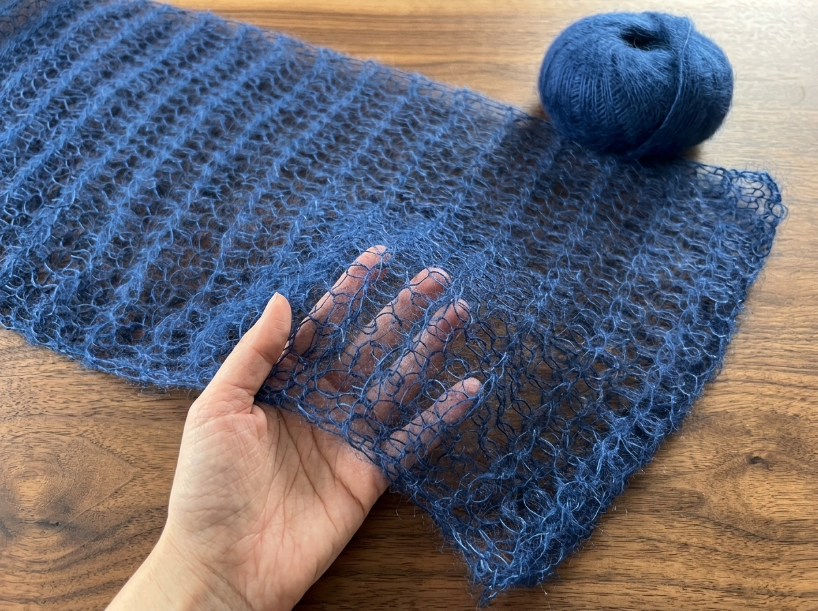
Merino and alpaca sit on the soft end of the spectrum. Merino and alpaca can produce soft, comfortable fabrics with good drape. Depending on how the yarn is spun and finished, their stitch definition can range from crisp to relatively soft, while alpaca in particular can contribute considerable drape. If you are working a cable pattern or a textured stitch, the detail will be harder to see in a fuzzy or haloed yarn than in a smooth cotton. That said, if the project is a shawl or a wearable that needs to move with the body, merino’s drape becomes the advantage rather than the limitation. Yarn Under vs. Yarn Over: The Structural Guide to Crochet Stitch Anatomy covers how yarn wrapping direction interacts with fiber structure to affect stitch clarity.
Real Examples
A granny square blanket worked in soft acrylic will feel cozy but may pill after repeated washing. The same pattern worked in cotton will hold its shape and show the stitch structure more clearly, but the finished blanket will feel stiffer and less flexible. Neither choice is wrong, but the decision depends on whether you prioritize softness or durability.
Amigurumi patterns almost always recommend cotton or a cotton blend because the tight stitches need to prevent stuffing from showing through. Lofty or fuzzy yarns can make the fabric appear less solid and can make gaps harder to evaluate visually. For amigurumi, a smooth, relatively firm yarn makes it easier to judge stitch density and minimize visible stuffing. The catch is that cotton’s stiffness can make it harder to work with for beginners, which is why a cotton-acrylic blend is often a better starting point.
Textured stitches like bobbles and popcorns show best in smooth, sturdy yarn with tight twist. A cable pattern worked in a highly fuzzy or haloed mohair yarn may lose some of its visual definition because the halo obscures individual stitch boundaries. In contrast, the same pattern worked in worsted weight cotton will show every crossing and pop clearly. If the goal is to create visual texture, sturdy yarn is usually the best choice.
Common Mistakes
Choosing yarn based on softness alone often leads to finished pieces that don’t hold their shape. A tote bag worked in soft merino will stretch and sag under the weight of groceries, while the same bag worked in cotton will maintain its structure. The better approach is to match the yarn’s structural properties to the project’s functional requirements rather than choosing based on softness alone.
Using fuzzy yarn for a textured pattern is another common misstep. The halo obscures the stitch detail, so the work looks like a solid mass of fabric rather than a defined pattern. If you have already started a project with fuzzy yarn and the stitches aren’t showing, switching to a smooth yarn with tight twist will reveal the pattern. This does not apply if the goal is a soft, cozy texture where stitch definition doesn’t matter.
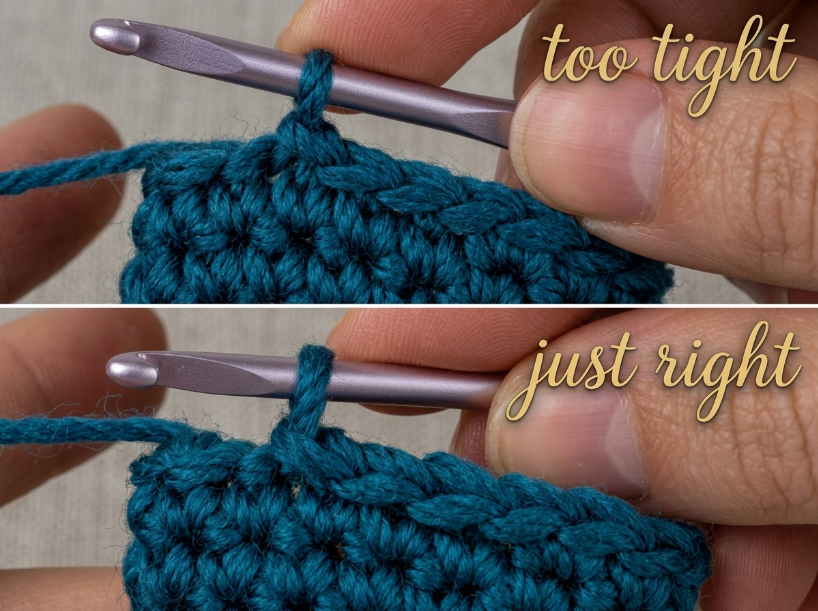
Working with a hook that is too large for the yarn weight can make even sturdy yarn look loose and undefined. The fabric will have gaps between stitches, and the structure will be weak. Dropping down a hook size generally creates a denser fabric and can make stitch definition more pronounced, although it can also reduce drape. The result depends on the yarn, stitch pattern, and tension. If the project needs both structure and drape, adjusting tension is often a better fix than changing hook size.
| Example | What it shows |
|---|---|
| Dishcloth in cotton | High stitch definition, holds shape after washing, feels stiff when wet |
| Baby blanket in soft acrylic | Drapes naturally, feels plush, pills after repeated washing |
| Amigurumi in cotton blend | Tight stitches prevent stuffing show-through, maintains firm structure |
| Shawl in merino wool | Soft hand feel and potentially excellent drape, stitch definition varies with yarn construction |
Questions You Might Still Have
Q: Can you explain soft vs sturdy yarn for texture, projects & stitch definition in simple terms without jargon?
Soft yarn feels plush and drapes naturally, making it comfortable for blankets and wearables. Smooth, firmly spun yarns often hold their shape well and show stitch detail clearly, which is why they are used for bags, amigurumi, and textured patterns. The choice depends on whether you need the fabric to move with the body or stay rigid under stress.
Q: Why does soft vs sturdy yarn matter for crochet projects?
The yarn’s structure determines whether the finished piece holds its shape or drapes naturally, and whether stitch patterns show clearly or blend into a solid mass of fabric. A bag worked in soft yarn will stretch out of shape, while a blanket worked in stiff yarn will feel uncomfortable. Matching the yarn to the project’s functional requirements helps prevent these problems.
Q: How is yarn structure different from similar techniques?
Yarn structure is a material property, not a technique. It affects how the fabric behaves before you even pick up the hook. Tension and hook size can adjust the fabric’s drape and stitch definition, but they can’t entirely change the fiber’s inherent properties. Cotton generally has less elasticity than acrylic, and merino usually drapes more than cotton.
Q: Can you give a practical example of soft vs sturdy yarn?
A granny square blanket worked in soft acrylic will feel cozy but may pill after washing. The same pattern worked in cotton will hold its shape and show the stitch structure more clearly, but the finished blanket will feel stiffer. The choice depends on whether you prioritize softness or durability.
Q: What do I need to understand before working with soft vs sturdy yarn?
You need to know whether the project needs structure or drape, and whether stitch definition matters for the pattern. Textured stitches like cables and bobbles generally show more clearly in smooth, firmly spun yarns with good stitch definition. Wearables and blankets often benefit from yarns and constructions that produce comfortable drape, but the best choice depends on the fiber, yarn construction, stitch pattern, and desired fabric.
Q: Where do beginners usually get confused about soft vs sturdy yarn?
Beginners often choose yarn based on softness alone, then find that the finished piece doesn’t hold its shape or that stitch patterns don’t show clearly. The fix is to match the yarn’s structural properties to the project’s requirements. If the project needs structure, look for yarns and constructions that produce a stable fabric, such as many cotton yarns or firmly spun blends. If it needs drape, look for yarns and constructions that produce a flexible fabric, such as some merino, alpaca, or acrylic yarns. The specific yarn construction and your gauge also matter.
📅 Last reviewed: August 2026 · This article is reviewed every 12 months.
Summary
Soft, lofty, or fuzzy yarns can produce comfortable fabrics with good drape, although they may provide less visual stitch definition depending on their construction. Smooth, firmly spun yarns often show stitch detail more clearly and can produce a more stable fabric. The choice depends on whether the project needs to move with the body or stay rigid under stress. For wearables and blankets, prioritize drape. For amigurumi and textured patterns, prioritize structure.

