


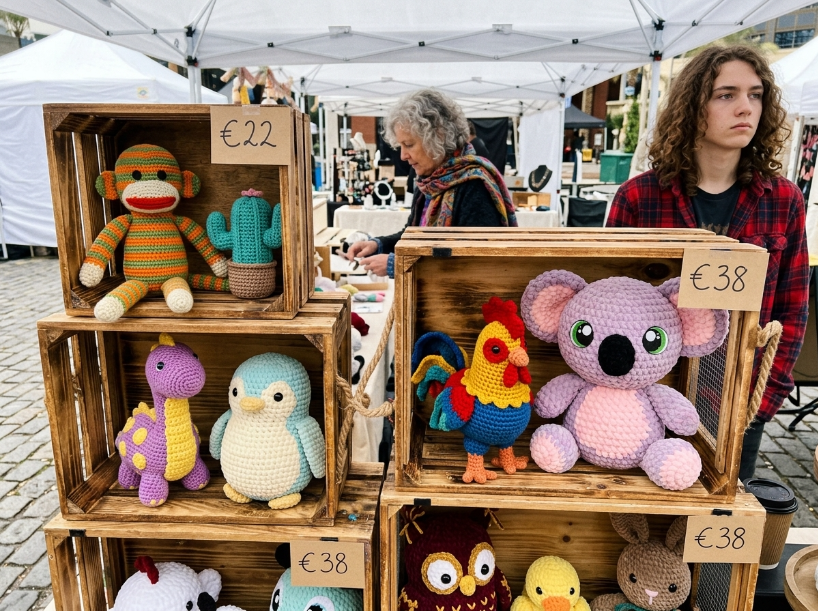
Turning crocheted toys into a viable income stream requires accurate pricing that accounts for materials, labor, and the structural reality that tight-tension amigurumi takes significantly longer to complete than looser-gauge projects.
The Short Answer
Selling amigurumi profitably means pricing each piece to cover yarn cost, stuffing, safety eyes, and at least minimum wage for your labor hours. Most beginners undercharge by calculating materials only, which turns hobby work into unpaid labor.
Main Steps
Pricing amigurumi starts with tracking the actual time spent crocheting, not the time you think it should take. A small keychain-sized piece worked in sport weight yarn might take a couple of hours, while a medium-sized animal in worsted weight can take several hours or more. The reason timing matters is that amigurumi commonly uses single crochet because it creates a relatively compact fabric that helps stuffing stay contained. Working at tight tension produces smaller, denser stitches, so more stitches may be needed to cover a given area than with larger, taller stitches worked at a looser gauge.
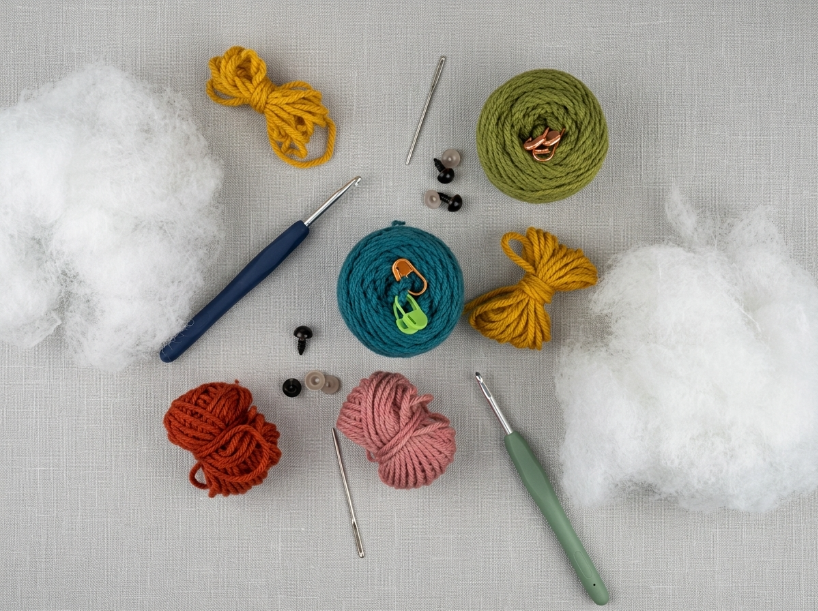
Materials cost is straightforward but easy to miscalculate. A finished toy might use half a skein of acrylic yarn, a handful of polyester fiberfill, and a pair of safety eyes. That sounds inexpensive until you price each component accurately. Acrylic yarn runs roughly $3 to $6 per skein depending on brand, safety eyes cost $0.50 to $2.00 per pair, and stuffing adds another $0.50 to $1.00 per toy. If you are also interested in material safety standards, Non-Toxic Stuffing & Eyes: A Safety Guide for DIY Toys & Amigurumi covers that in depth.
A simple materials-multiplier formula can be useful as a quick starting point, but it can badly underprice labor-intensive amigurumi. Calculating materials and labor separately gives you a clearer picture of what each piece actually costs to produce, even if the final number feels uncomfortably high.
| Step | What to do | Watch out for |
|---|---|---|
| Track time per piece | Record start-to-finish hours including assembly and weaving in ends | Underestimating assembly time, which can add 30-60 minutes |
| Calculate materials cost | Add yarn, stuffing, safety eyes, and thread at actual purchase price | Forgetting to include small items like embroidery floss or felt details |
| Set hourly labor rate | Choose an hourly labor rate that reflects the value of your time, using your local minimum wage as a floor or reference point rather than treating it as a universal legal requirement. | Charging less than minimum wage turns profit into an unpaid hobby |
| Add overhead percentage | Include packaging, shipping supplies, and platform fees if selling online | Ignoring listing, transaction, payment-processing, advertising, and other applicable platform fees |
Comparison / Options
Selling through online marketplaces like Etsy exposes your work to a large audience but comes with several fees. Etsy currently charges a 6.5% transaction fee, a $0.20 listing fee, and a payment-processing fee that varies by country. Depending on your location and bank account, this processing fee typically ranges from 3% to 4.5% of the sale plus a small fixed amount per order. Offsite Ads can add another 12% or 15% when an order is attributed to those ads. The visibility is worth it for many sellers, since building an independent customer base from scratch can take years. That said, if you already have a local customer base through craft fairs or word-of-mouth, direct sales eliminate platform fees entirely and let you keep the full sale price.
Custom orders command higher prices than pre-made inventory because the buyer is paying for personalization and the guarantee that the piece will be exactly what they want. A standard bear might sell for $25, while a custom bear in specific colors with embroidered details can justify $40 to $50. The tradeoff is that custom work locks you into a timeline and requires more communication with the buyer, which adds unpaid labor hours that do not show up in the stitch count.
Pricing for wholesale or consignment follows different math than direct-to-consumer sales. Wholesale pricing is often substantially below retail pricing, so you need to check whether the wholesale price still covers your materials, labor, overhead, and desired profit. The exact discount varies by retailer, product, and agreement. For consignment, the shop generally does not purchase the inventory outright, it sells it on your behalf and takes an agreed share. At wholesale rates, materials and labor costs can make selling unsustainable unless you are producing in volume or working with extremely efficient patterns. In contrast, selling directly at craft fairs lets you keep the full retail price, though booth fees and travel costs eat into profit in ways that online sales do not.
Common Mistakes
Underpricing to compete with mass-produced toys is the most common mistake new sellers make. A crocheted amigurumi toy generally cannot compete on price with factory-made plush that sells for $10 to $15, because those items are produced by industrial machinery at a scale that eliminates labor cost entirely. The reason handmade crochet commands higher prices is that it is genuinely handmade, one stitch at a time, with visible craftsmanship and customization options that mass production cannot offer. Trying to match factory pricing typically ensures you will work for less than minimum wage.
Forgetting to include finishing time in your labor calculation skews the final price downward. Weaving in ends, attaching limbs, embroidering faces, and stuffing the piece evenly can add 30 to 60 minutes to a project that took four hours to crochet. That finishing work is skilled labor that directly affects the quality of the final product, yet many sellers only count active crochet time when calculating hours. The catch is that buyers see the finished toy as a single product, not a breakdown of crochet-versus-assembly time, so undercharging for finishing work means undervaluing your own expertise.
Offering free shipping without adjusting the base price is another pricing error that erodes profit. Shipping a stuffed toy can significantly reduce your profit if you offer free shipping without including the expected postage cost in your pricing. Some sellers prefer to list shipping separately so buyers see the true cost breakdown, while others include shipping in the price to simplify checkout. Neither approach is universally better, but failing to account for shipping at all reduces your net profit significantly.
Troubleshooting
If your prices feel too high compared to what you see on Etsy or at craft fairs, check whether those listings are actually selling or just sitting in inventory. A $15 amigurumi listing that has been active for six months with no sales is not market validation, it is a sign that the seller has not yet found sustainable pricing. The reason this matters is that visible listings do not represent successful pricing strategies, they represent asking prices that may or may not generate income.
When buyers balk at your prices, the fix is not to lower them but to communicate the value more clearly. A product description that lists materials and dimensions does not explain why the piece costs $40. A description that mentions hand-stitched details, machine-washable materials, and the specific number of hours required to complete the work gives the buyer context for the price. In practice, buyers who understand the labor involved are more willing to pay fairly, while buyers who only see the finished product without context will usually compare your work to mass-produced alternatives.
If you are spending eight hours on a piece and cannot charge enough to make it profitable, the pattern itself may be the problem. Highly detailed designs with frequent color changes, tiny appendages, or complex shaping take longer to complete without adding proportional value in the buyer’s eyes. Switching to slightly simpler patterns with fewer pieces to assemble can cut labor time in half while producing toys that still look polished and sell at similar prices. The tradeoff is that simpler designs may feel less creatively satisfying, but profitability depends on finding patterns that balance craftsmanship with reasonable time investment.
| Mistake | Why it happens | Fix |
|---|---|---|
| Pricing at materials cost only | Treating crochet as a hobby instead of skilled labor | Calculate labor hours at minimum wage and add to materials cost |
| Account for platform fees | Assuming sale price equals take-home income | Check the current listing, transaction, payment-processing, advertising, and other applicable fees for the platform you use. |
| Underestimating project time | Counting active crochet but not finishing or assembly | Track full start-to-finish time including weaving ends and attaching parts |
| Offering bulk discounts too early | Trying to move inventory before pricing is sustainable | Set profitable per-piece pricing first, then test small discounts |
Deciding Your Pricing Strategy
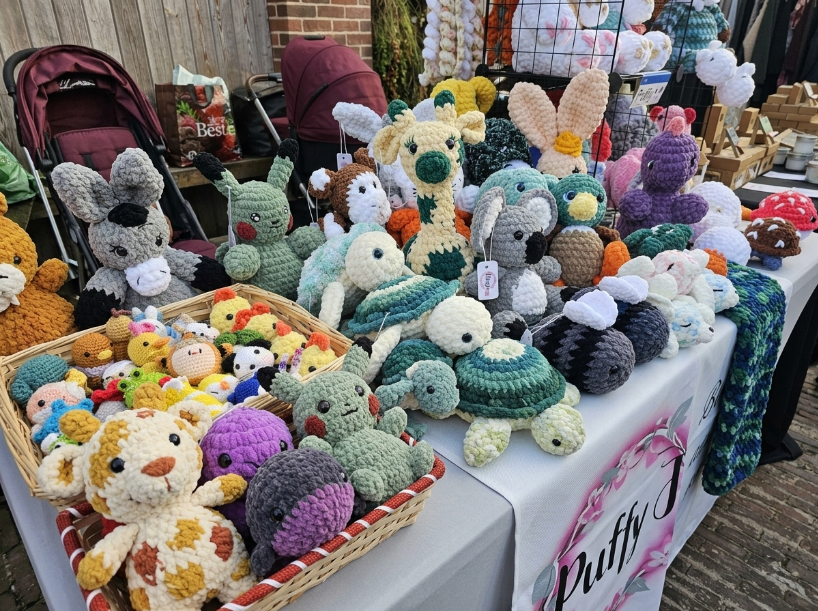
If you want to sell toys as a side income without the pressure of filling orders on a schedule, pre-made inventory sold at craft fairs or through a personal website gives you full control over pricing and production pace. You can work on pieces when you have time, list them when they are finished, and avoid the stress of custom deadlines. The downside is that unsold inventory ties up materials cost and storage space, and you cannot predict which designs will sell until you test them in front of real buyers.
Custom orders generate higher per-piece income and let you charge for personalization, but they require clear communication about timelines and design limits. A buyer who requests a custom color scheme and specific accessories is paying for that flexibility, which often justifies a 20-30% markup over your standard pricing. Even so, custom work demands more back-and-forth messaging, progress photos, and the risk that the buyer’s vision does not match what you can realistically execute within the agreed timeline.
Wholesale arrangements provide steady volume but require pricing that can absorb a substantial margin cut. If your retail price is $30 and a shop offers to buy at $15, you need to confirm that $15 still covers materials, labor, and a reasonable profit margin. For most small-scale crocheters, wholesale only becomes viable once you have streamlined your process enough to complete pieces quickly or have access to discounted bulk materials. In contrast, direct sales at full retail price may move more slowly but preserve your profit margin on every piece sold.
Questions You Might Still Have
Q: How should a beginner price their amigurumi?
Start by tracking the time it takes to complete one finished piece from start to finish, including assembly and finishing. Multiply that time by an hourly labor rate that reflects the value of your time, using your local minimum wage as a floor or reference point where appropriate, then add the actual cost of materials and applicable overhead. That total is your baseline price, and anything below it means you are working for less than minimum wage.
Q: How long does amigurumi actually take?
A small keychain-sized piece in sport weight yarn might take two to three hours, while a medium-sized animal in worsted weight can take six to eight hours or more. Finishing work like attaching limbs, embroidering faces, and weaving in ends adds another 30 to 60 minutes depending on design complexity.
Q: Which hook size is best for amigurumi?
Amigurumi patterns commonly use a smaller hook than the yarn label’s suggested range to create a firm fabric with small gaps, but the correct hook size depends on the yarn, pattern, and your tension. The pattern’s stated hook size and gauge should take priority. Worsted weight yarn typically pairs with a 3.5mm or 4mm hook, while sport weight uses a 3mm or 3.5mm hook as common examples.
Q: Why am I losing money selling amigurumi?
The most common mistake is calculating only materials cost and ignoring labor hours, which turns skilled work into unpaid hobby time. Forgetting to include finishing time, platform fees, and shipping costs also skews pricing downward and erodes profit.
Q: What should I do when buyers complain about prices?
Communicate the value clearly by explaining the labor hours, hand-stitched details, and machine-washable materials in your product description. Buyers who understand the work involved are more willing to pay fairly, while buyers who only compare to factory-made toys will always expect lower prices.
Q: Is there a faster way to finish amigurumi toys?
Choosing patterns with fewer pieces to assemble and minimal color changes cuts labor time without sacrificing quality. Working in joined rounds can make the round transitions more predictable and create a visible seam, but it does not necessarily make the project faster.
📅 Last reviewed: August 2026 · This article is reviewed every 12 months.
Summary
Selling amigurumi profitably requires pricing that covers materials, labor at minimum wage, and overhead costs like platform fees and shipping. Most beginners undercharge by ignoring labor hours or trying to compete with mass-produced toys, which usually guarantees unpaid work. Once you track actual project time and set sustainable pricing, selling handmade crochet becomes a realistic side income rather than an expensive hobby.

