


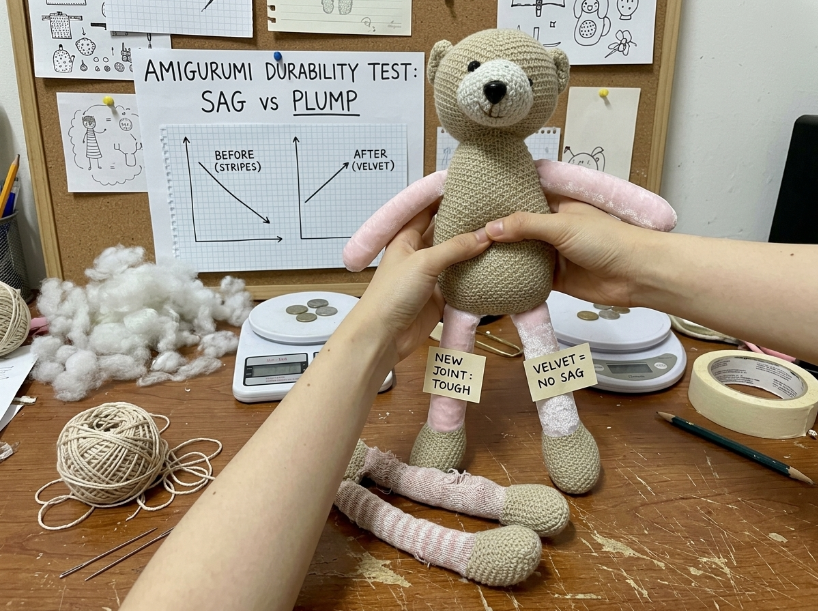
A finished amigurumi can look perfect when you set it down, but after a few weeks of handling, the head tilts forward, the limbs droop, or the body loses its round shape. The fabric has not torn, but the toy no longer holds the form you worked so carefully to create.
The Short Answer
Amigurumi can sag when the crocheted fabric deforms under stuffing pressure, its own weight, or repeated handling. Overstuffing, loose fabric, and the characteristics of the yarn can all contribute to permanent or temporary changes in shape. Tight tension with an appropriately small hook helps reduce gaps and creates a denser fabric that can better support the stuffing. Test durability by stuffing a gauge swatch firmly and squeezing it repeatedly to see if the fabric holds or gives.
Main Steps
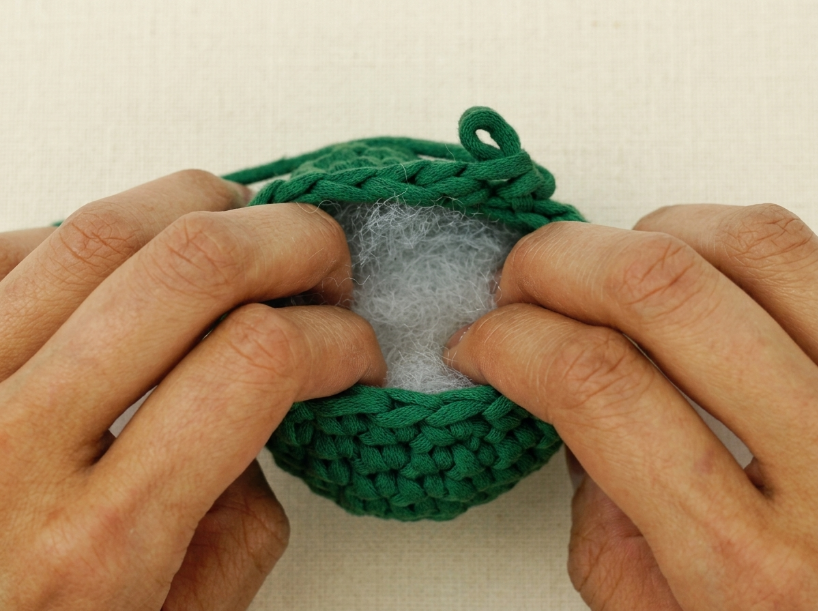
Testing durability before you commit to a full project reveals how the fabric will behave under real-world stress. Work a small tube in single crochet using your intended yarn and hook size, stuff it firmly with polyester fiberfill, and close both ends. Squeeze the tube repeatedly over several minutes, mimicking the handling a toy receives during play. If the stitches stretch visibly or the stuffing starts to show through, the fabric is not dense enough.
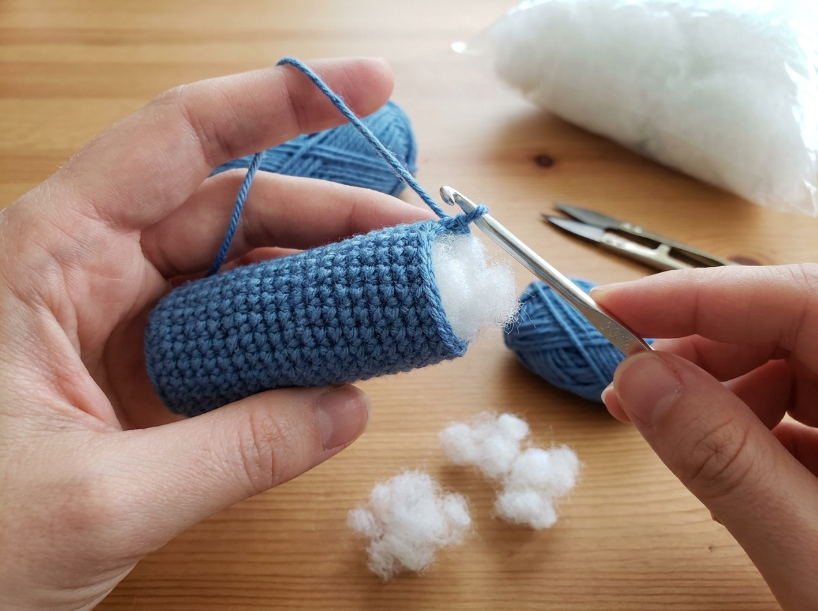
Many guides suggest working a flat gauge swatch to check stitch count, and that is useful for garments where drape matters. For amigurumi, however, a flat swatch does not tell you what happens when the fabric is stretched in three dimensions around a ball of stuffing. A stuffed tube under pressure provides a more relevant practical test than a flat swatch because it lets you observe how the fabric behaves when stretched around stuffing. The tradeoff is that this test takes more time and yarn than a simple flat square, so save it for projects where durability is critical, like toys for young children.
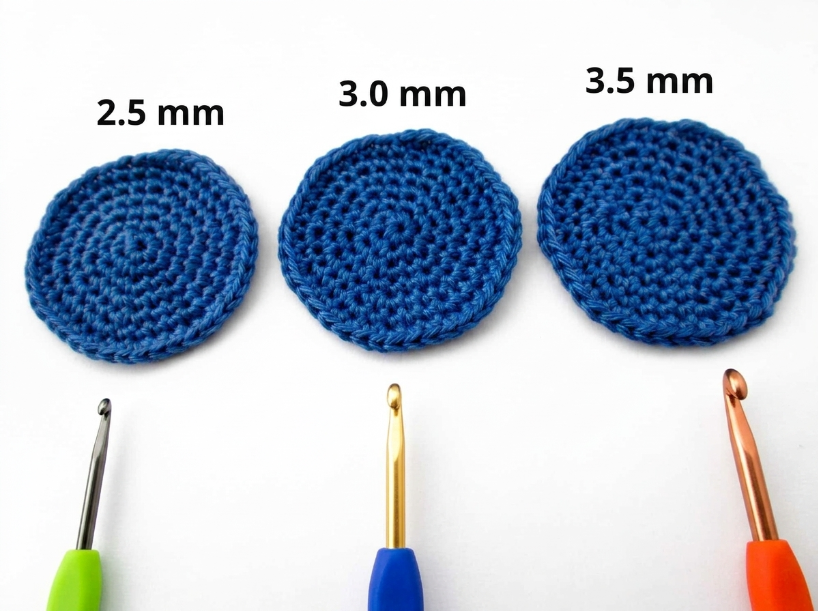
Hook size is one of the main factors affecting fabric density, alongside your working tension and the yarn itself. A 3mm hook with worsted weight yarn creates tighter stitches than a 4mm hook with the same yarn, even if you crochet loosely. If your test tube shows gaps after squeezing, try a smaller hook and test again. In contrast, if the fabric feels stiff and your hands ache after a few rounds, a slightly larger hook can ease the strain without sacrificing structure, provided the fabric still hides the stuffing.
| Step | What to do | Watch out for |
|---|---|---|
| Work a test tube | Crochet a small cylinder in single crochet using your project yarn and hook. | Flat swatches do not reveal how fabric behaves under three-dimensional stress. |
| Stuff firmly | Fill the tube with polyester fiberfill at the same density you plan for the toy. | Understuffing the test will not show real-world stretch. |
| Squeeze repeatedly | Compress the tube firmly for several minutes, mimicking handling during play. | Check for visible stitch gaps or stuffing showing through the fabric. |
| Adjust hook size | If gaps appear, try a smaller hook and repeat the test. | If the fabric feels too stiff, try one size larger instead. |
Comparison and Options
Cotton often produces a firmer, more structured amigurumi fabric than many acrylic yarns, although the result depends on the specific yarn, hook size, and tension. Cotton also has relatively low stretch compared with many synthetic yarns, which can help finished details retain their shape. That said, cotton can feel rough on the hands during long sessions, and it is heavier than acrylic, which makes large toys feel dense and solid rather than soft and huggable.
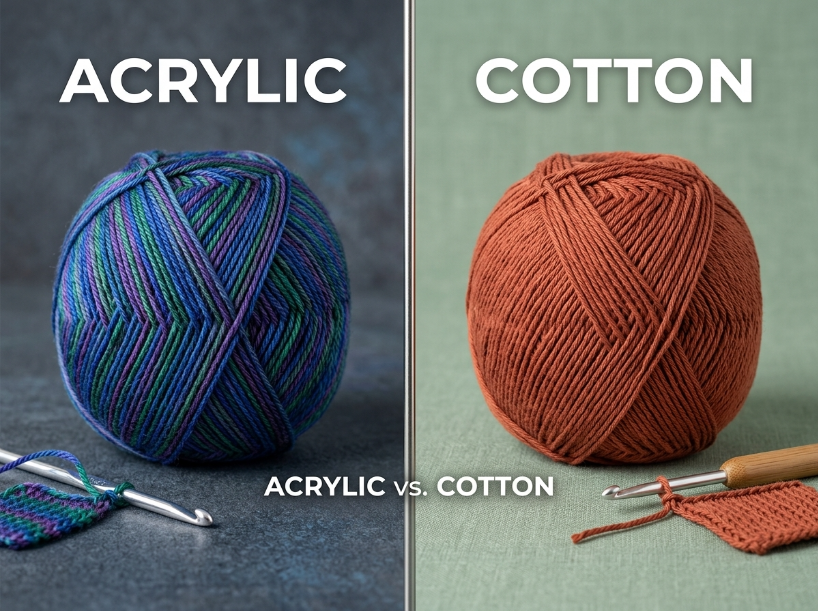
Some acrylic yarns have more give than cotton and may produce a softer, less structured fabric. Under heavy stuffing or repeated handling, a toy can gradually develop a softer or more distorted shape. If durability matters more than softness, a cotton-acrylic blend splits the difference, offering some of cotton’s stability with more give than pure cotton.
Polyester fiberfill can gradually lose some loft under repeated compression, depending on the type of fill and how heavily the toy is handled. Wool fiberfill can retain its loft well, but wool may felt when exposed to moisture, heat, and agitation. If you use wool fill, follow the fiber and toy’s care requirements and avoid assuming it will tolerate frequent machine washing.
Common Mistakes
Overstuffing can put excessive tension on the crocheted fabric and cause the finished shape to distort. The fabric may look tight while you are stuffing, but excessive internal pressure can make stitches spread and can contribute to gaps or deformation over time. Understuffing, on the other hand, can leave a toy floppy, so the goal is enough stuffing to support the shape without forcing the stitches apart.
Using a hook that is too large for the yarn weight is a frequent cause of visible stuffing. The stitches sit farther apart, and the gaps between them widen under pressure. Most patterns specify a hook slightly smaller than the yarn label recommends because amigurumi requires denser fabric than a scarf or blanket. In practice, hook size alone does not guarantee durability if your natural tension is extremely loose. If you consistently see gaps even with a small hook, switching to a yarn with less stretch or a construction that produces a denser fabric can help.
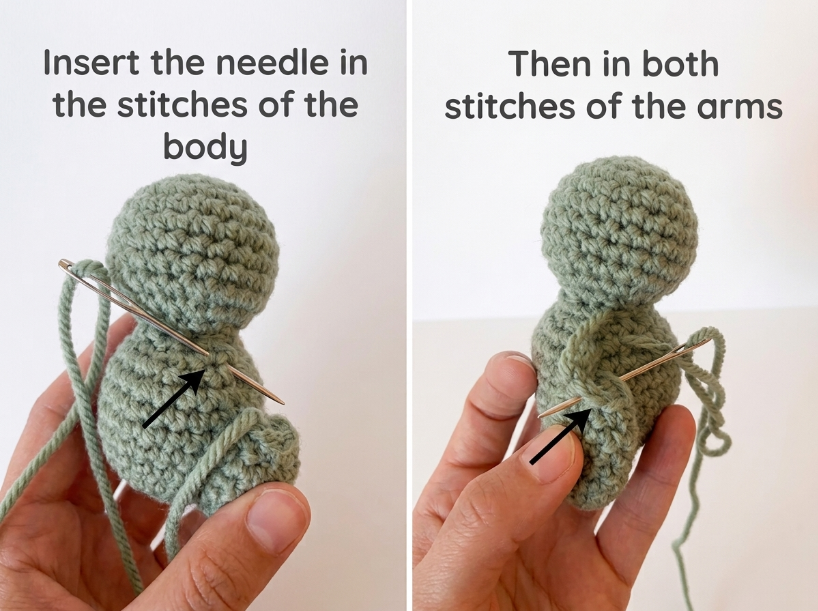
A lightly secured limb or an attachment that passes through too few stitches can create a weak point under repeated stress. Reinforcing attachment points with multiple passes of yarn distributes the stress across more stitches. The catch is that this adds time to the finishing process, so it may not be necessary for display-only toys that will not be handled roughly.
Troubleshooting
| Mistake | Why it happens | Fix |
|---|---|---|
| Saggy body after a few weeks | Excessive stuffing pressure, loose fabric, stuffing compression, or yarn characteristics. | Check the stuffing density and fabric tension. If the fabric has permanently stretched, reducing stuffing may improve the shape but may not fully restore the original form. |
| Stuffing shows through fabric | Hook size too large or yarn too elastic for dense amigurumi structure. | Try a smaller hook or switch to cotton or a cotton-blend yarn. |
| Limbs pull away from body | A lightly secured limb creates a weak point under stress. | Reinforce with multiple passes of yarn through the same attachment points. |
| Toy collapses under its own weight | Understuffing or too-loose tension creates floppy fabric. | Add more stuffing and test with a smaller hook for denser fabric. |
If a finished toy develops a saggy belly or drooping limbs after a few weeks, the fabric has likely stretched and will not return to its original shape on its own. Removing some of the stuffing can reduce the strain on the stitches, but the fabric will still be looser than it was when you first finished the toy. Prevention through tight tension and appropriate stuffing density is more effective than trying to fix the problem after it happens.
Acrylic is heat-sensitive, so excessive heat can permanently alter the fibers. Deliberately applying enough heat to permanently reduce acrylic’s elasticity is commonly called “killing” the yarn. This can permanently reduce the yarn’s elasticity and alter its texture and drape. Because acrylic is heat-sensitive, check the yarn manufacturer’s care instructions before using any heat-based blocking method. Wet blocking is generally less useful for permanently reshaping acrylic than controlled heat, while other fibers can respond quite differently to water. Follow the yarn’s care instructions and test the method on a swatch first.
If the stuffing shows through the fabric even though your tension feels tight, the yarn’s stretch and construction may be contributing to the problem. Switching to a less stretchy fiber like cotton or a cotton blend solves this more reliably than trying to crochet tighter with a yarn that naturally wants to stretch. In contrast, if the fabric feels stiff and your hands ache after a few rounds, a slightly larger hook can ease the strain without creating visible gaps, as long as you test the new hook size with a stuffed tube first.
Questions You Might Still Have
Q: What is the easiest way to test whether a toy will hold up to handling?
Work a small stuffed tube in single crochet using your project yarn and hook size, then squeeze it repeatedly for several minutes. If the stitches stretch visibly or the stuffing shows through, the fabric is not dense enough. Try a smaller hook and repeat the test until the fabric holds its shape under pressure.
Q: How long does it take to test durability before starting a full project?
A small test tube takes 15 to 30 minutes to crochet, stuff, and test, depending on your working speed and how many hook sizes you need to try. Testing adds time upfront but prevents having to remake an entire toy later if the fabric sags or stretches.
Q: What hook size and yarn weight do I need for durable amigurumi?
A small hook relative to the yarn is commonly used for amigurumi to create a dense fabric, but the exact hook size depends on the yarn, your tension, and the pattern. Test with a stuffed tube to confirm the fabric holds up under pressure.
Q: What are the most common mistakes when testing amigurumi durability?
Testing with a flat swatch instead of a stuffed tube does not reveal how the fabric behaves under three-dimensional stress. Understuffing the test piece also will not show real-world stretch, and skipping the squeeze test means you will not know if the fabric holds until the toy is already finished.
Q: How do I fix a toy that has already started to sag?
Check the stuffing density and fabric tension. If the fabric has permanently stretched, reducing stuffing may improve the shape but may not fully restore the original form.
Q: Is there a faster method for testing durability?
A stuffed tube is a useful practical test because it mimics the three-dimensional stress a toy experiences during handling. Flat swatches do not reveal how fabric stretches around stuffing, and skipping the test entirely means you will not know if the fabric holds until the project is finished.
📅 Last reviewed: August 2026 · This article is reviewed every 12 months.
Summary
Amigurumi durability depends on tight tension, appropriate hook size, and a yarn choice that resists stretching under repeated handling. Testing with a stuffed tube before starting a full project gives you a practical indication of how the fabric behaves under stuffing pressure and repeated compression. Cotton often produces a firmer, more structured fabric than many acrylic yarns, while some acrylics are softer but stretch more easily under pressure. By understanding these material behaviors and testing your gauge in 3D, you can ensure your handmade characters maintain their shape for years to come.

