


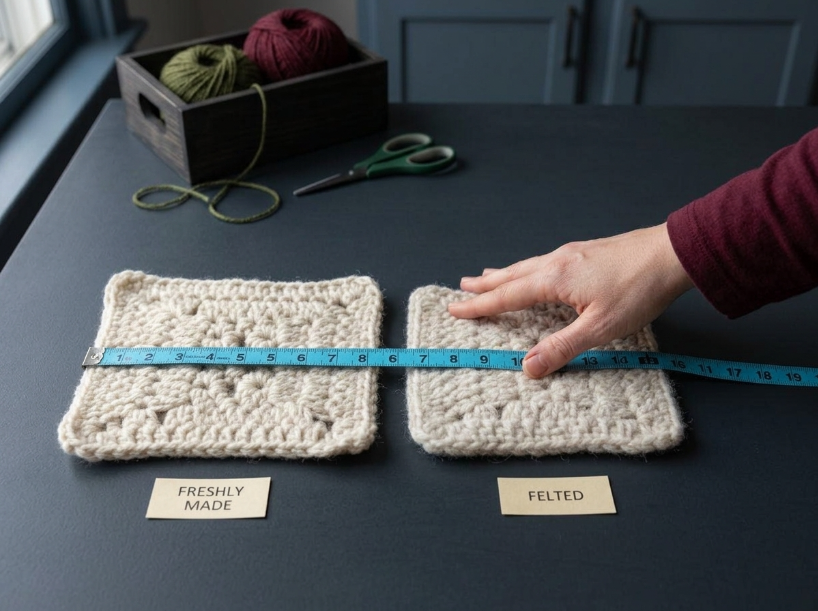
A finished crochet piece that measures larger than intended cannot always be fixed by pulling tighter on the stitches. The yarn’s fiber structure determines whether shrinking is possible at all, and methods that work for wool can compromise acrylic.
The Short Answer
Untreated wool and some other animal fibers can undergo permanent shrinkage and felting through controlled hot water washing and agitation, which causes the fibers to felt together. Acrylic does not permanently shrink through washing because its synthetic structure is heat-set during manufacturing. Cotton can shrink when exposed to washing and heat, but the amount varies considerably with the yarn, construction, and finishing. It does not felt like wool, so cotton shrinkage is a different process and is generally less predictable as a deliberate sizing method.
Main Steps
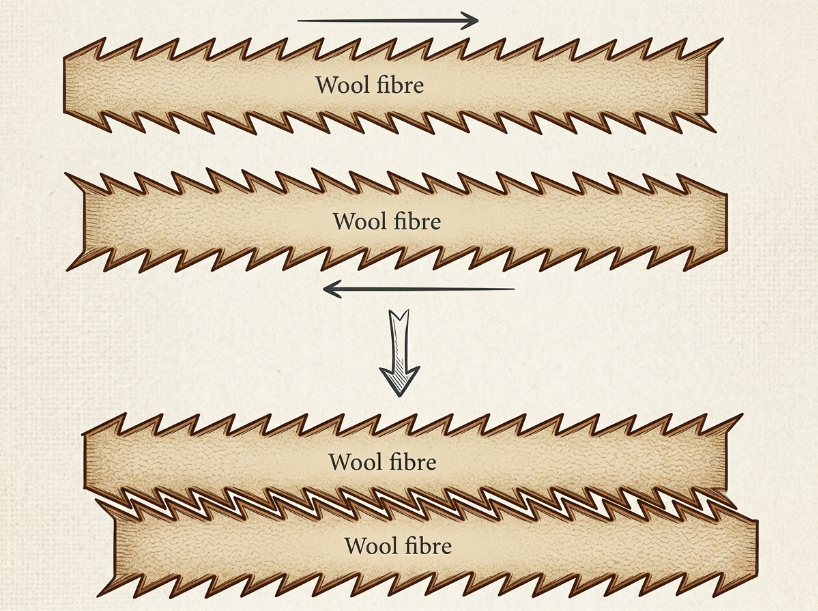
Hot water and machine agitation are commonly recommended for shrinking untreated wool, where the combination of heat and movement causes the fiber scales to lock together permanently through felting. The process is irreversible, which is why testing on a gauge swatch before attempting to shrink the full project prevents ruining hours of work.
That said, this method is generally ineffective with acrylic yarn. Acrylic is a synthetic polymer that was heat-set into its final shape during manufacturing, and hot water or agitation will not change its structure in the same way. Acrylic does not felt like wool, but heat can permanently alter its structure. Steam can relax and reshape acrylic fabric, while excessive heat can flatten the stitches, reduce their original texture, or even melt the fibers. Because the result depends on the yarn and the amount of heat applied, test any heat-based method on a swatch first.
Cotton sits between these two extremes. Cotton does not felt like wool because its cellulose fibers do not have wool’s surface scales. However, cotton fabrics and crochet pieces can still shrink during washing and drying, with the amount depending on the yarn, construction, and finishing. Because the result is difficult to predict from the fiber label alone, deliberately shrinking a finished cotton project is not an especially precise sizing method. If you need a cotton project to shrink predictably, the reliable fix is to rework the piece with a smaller hook or tighter tension.
Superwash wool is treated to reduce its tendency to felt and shrink. The treatment modifies the fiber surface so the scales are less likely to interlock during washing, which is why many superwash yarns can be machine-washed without felting like untreated wool. If you are not certain whether your wool yarn is superwash, check the label before attempting to shrink the project.
| Step | What to do | Watch out for |
|---|---|---|
| Test on a swatch first | Crochet a small swatch with the same yarn and wash it using your planned shrinking method | Skipping this step risks ruining the full project with unpredictable results |
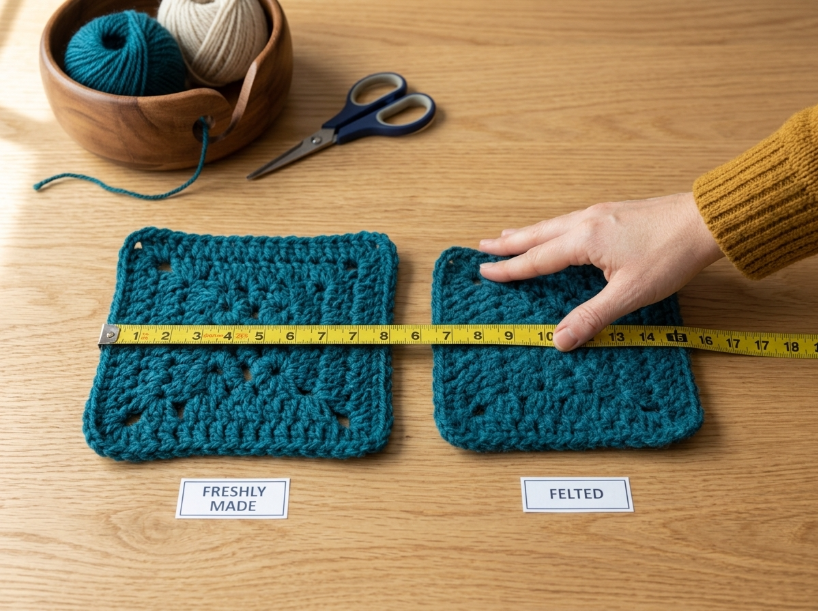
| Use hot water for wool | Submerge untreated wool in hot water and agitate gently to encourage felting | Too much agitation or heat causes uneven or excessive shrinkage |
| Shape while wet | Gently reshape the piece after washing/felting and allow it to dry in the desired form | Drying without shaping allows the fabric to settle unevenly |
| Allow complete drying | Let the piece dry fully while pinned before removing it from the mat | Removing pins too early allows the fabric to relax back toward its original size |
Comparison / Options
Untreated wool can undergo substantial shrinkage and felting when exposed to moisture, heat, and agitation. The felting process is irreversible, which makes it a good choice for projects that need to be reduced by more than a small fraction of their original size. In practice, felting also changes the fabric’s texture, making it denser and less flexible, which is why it works well for bags and slippers but poorly for garments that need drape.
Acrylic does not permanently shrink through felting because it is a synthetic fiber, but heat can permanently alter its structure. Steam can reshape acrylic fabric, while excessive heat can flatten stitches, reduce texture, or damage the fibers. If an acrylic project is too large, reworking it with a smaller hook is the most predictable way to reduce its dimensions.
Cotton does not felt like wool because its cellulose fibers do not have wool’s surface scales. That said, cotton fabrics and crochet pieces can still shrink during washing and drying, with the amount depending on the yarn, construction, and finishing. Because the result is difficult to predict from the fiber label alone, deliberately shrinking a finished cotton project is not an especially precise sizing method. Kid-Safe Crochet Tools: The Essential Beginner’s Guide covers yarn selection for projects where sizing precision matters from the start.
Common Mistakes
A common mistake is assuming that all yarn can be shrunk using the same method. Acrylic and cotton do not felt in the same way as untreated wool. Cotton can still shrink during washing and drying, while excessive heat can alter acrylic, so neither should be treated as though it will respond predictably to wool-felting methods. Testing the method on a gauge swatch before applying it to the full project prevents this outcome.
Another frequent error is using machine drying on high heat to speed up the shrinking process. High heat accelerates felting in wool, but it also increases the risk of uneven or excessive shrinkage that cannot be corrected. The fabric may shrink more in some areas than others, creating a distorted shape that is worse than the original sizing issue. Air drying the piece while pinned to exact measurements produces more predictable results.
Skipping the shaping step after washing is an error that leaves the final size to chance. Even if the yarn shrinks as expected, the fabric will not settle into a consistent shape without being pinned to specific measurements during drying. The catch is that blocking only works if the yarn has already shrunk to approximately the right size. If the piece is still too large after washing, blocking cannot force it smaller.
Troubleshooting
If an untreated wool project did not shrink enough, further controlled felting may produce additional reduction, but the result becomes increasingly difficult to predict. Test the process on a swatch first rather than repeatedly increasing heat or agitation on the finished piece. In contrast, acrylic will not felt like wool, while cotton may undergo some additional washing-related shrinkage depending on the yarn and fabric. Neither should be treated as predictable wool-felting materials.
If the project shrank too much, the damage is generally permanent. Felted wool cannot be stretched back to its original size because the fiber scales have locked together. A possible fix is to block the piece to the largest possible measurements while it is still wet and hope that it relaxes slightly as it dries. This rarely recovers more than a small fraction of the lost size.
If the fabric shrank unevenly, creating a distorted shape, the problem is usually caused by inconsistent tension in the original crochet work or uneven exposure to heat and agitation during washing. Blocking the piece while wet can correct minor distortions by redistributing the tension across the fabric. For severe distortion, the most reliable fix is to unravel the affected sections and rework them with more consistent tension.
| Mistake | Why it happens | Fix |
|---|---|---|
| Project did not shrink as expected | The fiber does not readily felt, or the washing conditions were insufficient for the intended result | Check the fiber content and care instructions. Do not keep increasing heat blindly, reworking with a smaller hook is the most predictable way to make a project smaller |
| Fabric shrank too much | Excessive heat or agitation caused over-felting | Block to maximum size while wet, accept permanent size loss |
| Shrinkage was uneven | Inconsistent tension in original work or uneven washing | Block wet fabric to redistribute tension, rework severely distorted areas |
| Texture became stiff and dense | Felting process bonded fibers too tightly | This is permanent, choose a different yarn for projects needing drape |
Still Deciding?
Q: What is the safest way to shrink a project for a beginner?
The safest approach is to test a small swatch made from the same yarn and crochet it with the same stitch pattern and tension as the project. Follow the intended washing/felting conditions on the swatch first. This shows whether the yarn actually changes and how dramatically before you risk the finished piece.
Q: How long does it take to shrink a project?
Washing and drying a wool project to shrink it through felting typically takes several hours, depending on how long the piece needs to air dry while pinned. Testing the method on a swatch first adds another hour or two. Results vary based on yarn thickness, fiber type, and how much shrinkage is needed.
Q: Does hook size or yarn weight affect shrinking?
Fiber content is the main factor determining how a finished project responds to shrinking or felting, while yarn construction, thickness, stitch pattern, and the original fabric density can affect how much the finished piece changes. If you want to avoid needing to shrink a project, working with a smaller hook from the start produces a denser fabric that measures closer to the target size.
Q: What is the most common shrinking mistake?
The most common mistake is assuming all yarn can be shrunk using hot water and agitation. Acrylic does not felt like wool, while superwash wool is designed to resist felting. Cotton may still shrink during washing and drying. Avoid increasing heat blindly, test the yarn on a swatch first.
Q: Can you reverse accidental shrinking?
If the project shrank too much through felting, the damage is permanent and cannot be reversed. Blocking the piece to the largest possible measurements while wet may recover a small amount of size, but felted wool cannot be stretched back to its original dimensions.
Q: Can you speed up the shrinking process?
Machine drying wool on high heat accelerates felting and shrinkage, but it increases the risk of uneven or excessive results. Air drying the piece while pinned to exact measurements takes longer but produces more predictable and controllable shrinkage. There is no faster method that maintains the same level of precision.
📅 Last reviewed: August 2026 · This article is reviewed every 12 months.
Summary
Untreated wool can undergo substantial permanent shrinkage and felting through moisture, heat, and agitation. Acrylic does not felt like wool, although heat can permanently alter its structure. Cotton can shrink during washing and drying, but the amount varies with the yarn and fabric construction. Testing the method on a gauge swatch before applying it to the full project prevents ruining hours of work with unpredictable results. After washing, gently shape the piece while it is wet and allow it to dry completely in that shape. This can help correct distortion, but it cannot precisely control how much the fiber has already shrunk.

